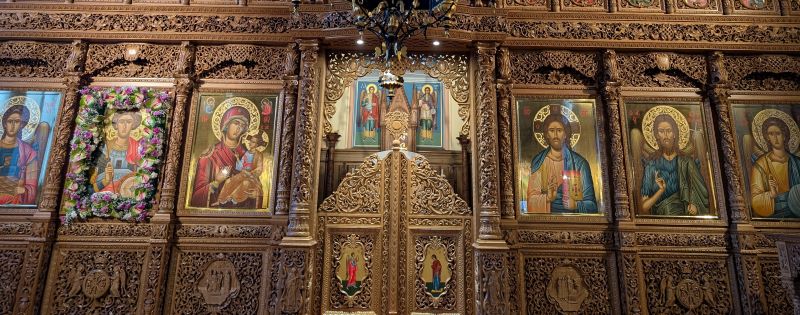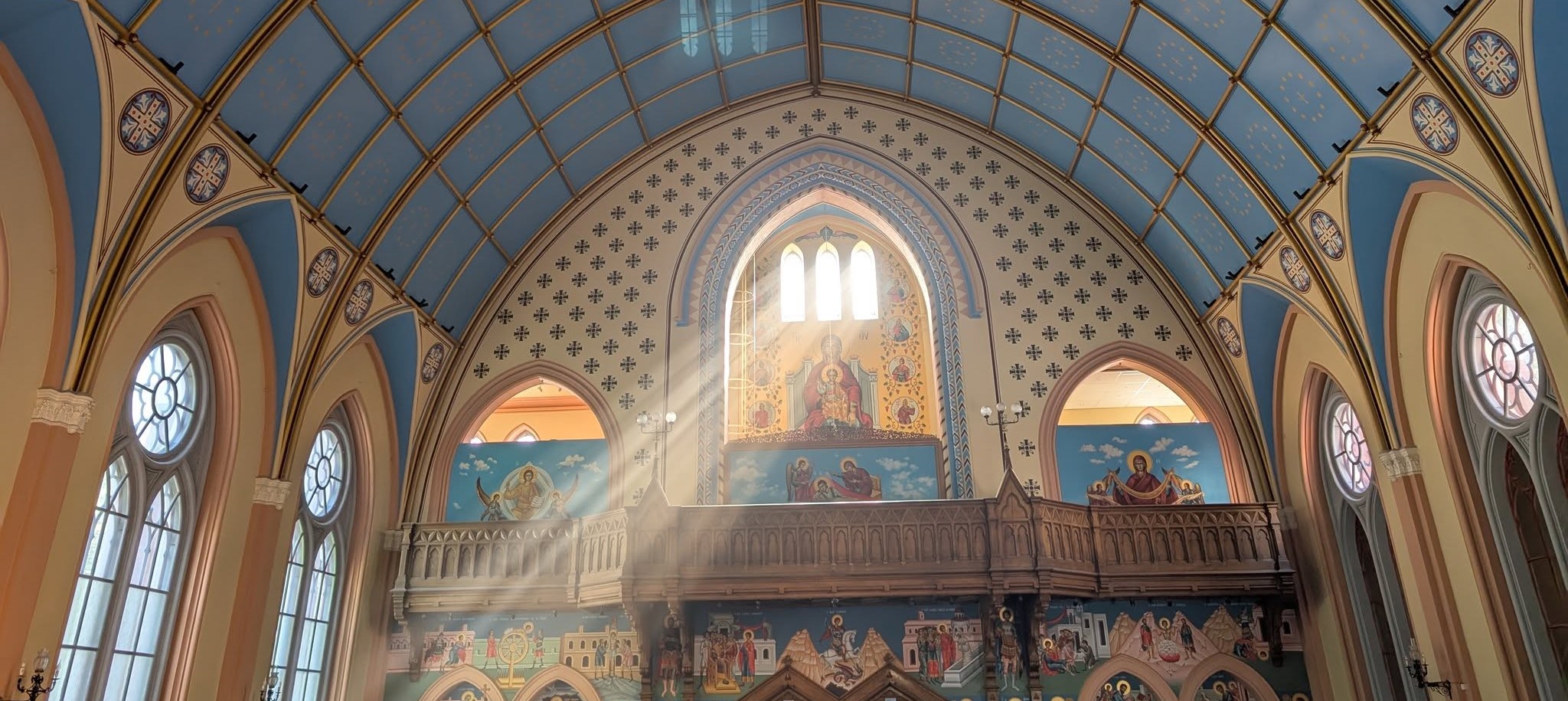
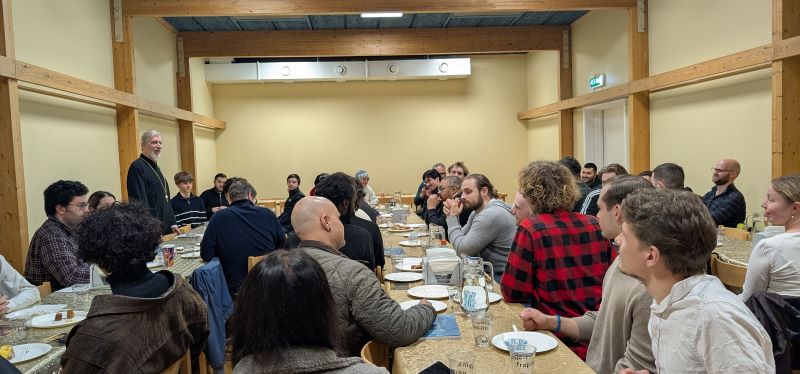
St. George Cathedral of Stockholm
Thursday, March 12, 2026
Topic: The Jesus Prayer
It is a great blessing and joy to speak with you today, especially as catechumens and newly illumined Christians—those who are approaching, or have recently entered, the fullness of the Orthodox faith. You are not simply learning about Orthodoxy. You are entering into a new life. You are entering into communion with the living God.
Upon the written recommendation of one of our Catechumens, today we will reflect together on one of the greatest treasures entrusted to the Orthodox Church, the Jesus Prayer.
This prayer is simple. It is short. It is accessible to everyone. And yet, according to the Holy Fathers, it contains within itself the whole mystery of salvation.
The Jesus Prayer is this: “Lord Jesus Christ, Son of God, have mercy on me, a sinner.”
This prayer has been prayed by saints, martyrs, monks, bishops, priests, and laypeople for nearly two thousand years. It has sanctified deserts, monasteries, cities, homes, prisons, hospitals, and hearts.


Today, we will explore what the Jesus Prayer is, where it comes from, why it is so important, and how it transforms our lives.
The Jesus Prayer is not an invention of monks. It comes directly from the Holy Scriptures. In the Gospel according to Saint Luke, we hear the prayer of the publican: “God, be merciful to me, a sinner.” (Luke 18:13) And our Lord Jesus Christ says that this man, not the proud Pharisee, went home justified.
In the Gospels, we also hear the blind man crying out: “Jesus, Son of David, have mercy on me!” (Luke 18:38)
And the Canaanite woman crying: “Have mercy on me, O Lord, Son of David.” (Matthew 15:22)
These prayers contain the same essential elements as the Jesus Prayer: Confession of faith in Jesus Christ, Recognition of His divine identity, Humility, Repentance, Cry for mercy.
The Jesus Prayer is the continuation of these Gospel prayers in the life of the Church. It is the prayer of the sinner who turns toward Christ. It is the prayer of the human person who recognizes that salvation comes not from himself, but from God.
This prayer, simple in its words yet inexhaustible in its depth, stands at the very center of Orthodox spiritual life.
It is both a confession of faith and a means of grace, both a cry of repentance and a participation in divine life. Through it, the believer enters into living communion with the Person of Jesus Christ.
To understand the Jesus Prayer fully, we must examine its theological foundation, its scriptural roots, its Patristic interpretation, its anthropological significance, and its place in the daily life of every Orthodox Christian.
Christ Himself promised: “Where two or three are gathered in My name, I am there in the midst of them.” (Matthew 18:20) And if He is present when we gather in His name, how much more is He present when we call upon His name with faith.
One of the central teachings of the Orthodox Church is that the purpose of the Christian life is purification of the heart. Christ says: “Blessed are the pure in heart, for they shall see God.” (Matthew 5:8)
The problem is not only external sin. The problem is the heart, because she is filled with pride, anger, fear, passions, anxiety, self-love. The Jesus Prayer gradually purifies the heart.
The Jesus Prayer, in its most common form, says: “Lord Jesus Christ, Son of God, have mercy on me, a sinner.” These words contain within themselves the entire Gospel. They are not merely a devotional formula but a theological confession.
The Jesus Prayer is fundamentally Christological. It is not simply a devotional formula; it is a confession of faith.
Each phrase contains dogmatic content:
- “Lord” (Kyrios) affirms Christ’s divine sovereignty, as proclaimed in Philippians 2:11: “Jesus Christ is Lord.” When we say “Lord,” we confess the divinity of Christ, affirming what Saint Paul declares: “No one can say ‘Jesus is Lord’ except by the Holy Spirit” (1 Corinthians 12:3).
- “Jesus” affirms the historical Incarnation, thus the eternal Logos became man for our salvation.
- “Christ” affirms Him as the Messiah, the Anointed One.
- “Son of God” affirms His eternal divine nature, as defined at the First Ecumenical Council (Nicaea, 325). Thus, we proclaim His eternal generation from the Father.
- “Have mercy on me, a sinner” expresses Orthodox soteriology: salvation through divine mercy, not human merit. We enter into the truth of repentance, which is the foundation of spiritual life.
One of the greatest problems in modern life is inner fragmentation. People feel divided. Restless. Empty. But Christ said: “Peace I leave with you; My peace I give to you.” (John 14:27) The Jesus Prayer brings this peace.
To understand why the invocation of the Name of Jesus has such power, we must turn to Holy Scripture. In the biblical tradition, the name is not merely a label but a revelation of the person. In Exodus, when Moses encounters God in the burning bush, he asks for God’s Name, and God responds, “I AM WHO I AM” (Exodus 3:14).
This is not merely identification but revelation of divine existence itself. In the New Testament, the fullness of divine revelation occurs in the Person of Jesus Christ.
Saint Paul writes that God “has given Him the name which is above every name, that at the name of Jesus every knee should bow” (Philippians 2:9–10). The Name of Jesus is inseparable from His Person.
Saint Paul also writes: “We all, with unveiled face, beholding the glory of the Lord, are being transformed into the same image.” (2 Corinthians 3:18)
This transformation begins here. Through prayer. Through grace. Through the Jesus Prayer.
Saint Peter proclaims, “There is no other name under heaven given among people by which we must be saved” (Acts 4:12). Thus, when the believer invokes the Name of Jesus, he does not merely pronounce a word but enters into relationship with the living Christ.
Apostle Peter also teaches us on theosis/deification: “That you may become partakers of the divine nature.” (2 Peter 1:4)
This statement is astonishing. It does not say that we merely imitate God. It says we participate in divine nature.
Christ Himself prays: “That they all may be one, as You, Father, are in Me, and I in You; that they also may be one in Us.” (John 17:21) This unity is theosis.
The Church Fathers teach that the Name of Jesus carries divine presence and power.
Saint John Climacus writes that the remembrance of Jesus destroys the enemies of the soul, because the Name communicates the presence of Christ Himself. He writes: “Flog your enemies with the Name of Jesus; for there is no stronger weapon in heaven or on earth” (The Ladder of Divine Ascent, Step 21).
Saint Hesychios the Priest, in the Philokalia, teaches that through the constant invocation of the Name of Jesus, the intellect is purified and illumined. He says: “Through the unceasing remembrance and invocation of our Lord Jesus Christ, the intellect is purified, illumined, and rendered capable of seeing divine light.” (Philokalia, Vol. I, Hesychios the Priest, On Watchfulness and Holiness, §5, p. 162)
Saint Diadochos of Photiki explains that when the soul begins to experience divine grace, the remembrance of Jesus becomes sweet and filled with peace. This sweetness is not emotional sentiment but the result of divine energy acting within the human person.
He says: “When the intellect begins to perceive the grace of the Holy Spirit, Satan also begins to attack the soul through thoughts… But the remembrance of God destroys these thoughts.” (Philokalia, Vol. I, Diadochos, On Spiritual Knowledge, §32, p. 259) Thus, the Jesus Prayer functions as spiritual purification.
To understand how this transformation occurs, we must examine Orthodox anthropology. The Holy Fathers teach that the human person is created in the image and likeness of God. Central to this image is the nous/mind, the spiritual faculty by which man knows God. The nous is not simply rational intellect but the organ of spiritual perception.
The nous is not equivalent to rational intellect (dianoia). Rather, it is the organ of spiritual perception.
Saint Gregory Palamas describes the nous as: “The eye of the soul.” Before the Fall, the nous was oriented toward God, dwelling in the heart, which the Church Fathers describe as the center of the human person.
Saint Maximos the Confessor explains that the fallen nous becomes enslaved to the passions and external sensory stimuli. The goal of spiritual life is the purification, illumination, and deification of the nous. This process is achieved through grace and ascetic practice. The Jesus Prayer plays a central role in this healing.
Saint Macarios the Great teaches that the heart contains the depths of the human person, and within it God desires to dwell.
However, through the Fall, the nous became darkened and dispersed. Instead of dwelling in the heart and perceiving God, it became scattered among created things and enslaved to the passions.
Saint Macarios also writes that the heart is a small vessel, yet within it are dragons and lions, but also God and the Kingdom (Philokalia, Vol. I, Homily 15). The heart is the meeting place of divine grace and human freedom.
Saint Paul describes this condition when he writes that the hearts of fallen humanity were darkened.
Saint Hesychios the Priest explains that when the intellect abandons remembrance of God, it becomes enslaved to passions and external distractions. This condition results in anxiety, fragmentation, and spiritual blindness. He writes in the Philokalia: “Through the constant remembrance of Jesus Christ, the intellect is purified.” The Jesus Prayer gathers the dispersed nous and returns it to the heart, its natural dwelling place.
The purpose of Orthodox spiritual life is the healing and restoration of the nous. This healing is accomplished through divine grace and ascetic practice, especially through prayer. The Jesus Prayer gathers the dispersed intellect and returns it to the heart.
Saint Hesychios also says: “The remembrance of Jesus is a weapon stronger than any other.” The prayer guards the mind against evil thoughts, temptation, despair, fear.
Saint John of Kronstadt says: “The name of the Lord is the Lord Himself.” When we invoke His Name, we are not alone.
The Jesus Prayer prepares the believer for eternal communion with God.
Saint Gregory of Nyssa describes salvation as an eternal ascent into divine life. The Jesus Prayer begins this ascent already in this life. It transforms the human person progressively.
Saint Isaac the Syrian teaches that the purified heart becomes the dwelling place of God.
Saint Theophanis the Recluse teaches “The mind must descend into the heart and remain there before God.” This reunification restores inner unity and allows the human person to experience divine presence. He says: “The Jesus Prayer is a standing before God with the mind in the heart, calling upon Him with humility and faith.” When we pray, “Have mercy on me,” we open the door of our heart to Christ.
This process leads us to the central goal of Christian life: theosis, or deification. This is the essence of hesychasm. The theological foundation of the Jesus Prayer was articulated most fully in the 14th century by Saint Gregory Palamas. He defended the hesychast monks of Mount Athos, who practiced the continuous invocation of the Name of Jesus.
Palamas writes: “The light of the Transfiguration is not a created symbol, but the uncreated energy of God.” The Jesus Prayer opens the human person to this uncreated grace. It is not merely psychological concentration. It is ontological transformation.
One of the central teachings of hesychastic theology is the reintegration of the nous and the heart.
Saint Nicephoros the Monk writes: “Sit down in a quiet cell… concentrate your intellect and lead it into the heart… and say, ‘Lord Jesus Christ, Son of God, have mercy on me.’”
(Philokalia, Vol. IV, Nikephoros the Monk, p. 217)
This instruction reflects the anthropology articulated by Saint Gregory Palamas. The heart is the center of human personhood. The Fall caused the fragmentation of the human person. The Jesus Prayer restores unity.
Saint Peter declares that we are called to become “partakers of the divine nature” (2 Peter 1:4).
Saint Athanasios the Great expresses this truth when he writes that God became man so that man might become god. This does not mean that we become divine in essence, but that we participate in divine life through grace.
Saint Basil the Great explains: “Through the Spirit we become participants in divine nature.” (On the Holy Spirit, 9.23) Theosis is participation, not identity. Communion, not absorption.
Saint Gregory Palamas explains this participation through his teaching on the distinction between God’s essence and energies. God’s essence remains transcendent and inaccessible, but His energies are uncreated and communicable. Through these energies, God truly communicates Himself to human beings. The divine light seen by the apostles at the Transfiguration was not created light but the uncreated energy of God. Through prayer and purification, the believer becomes capable of experiencing this same divine grace.
Saint Gregory Palamas also teaches that through prayer and the grace of God, the human person participates in the divine life. This is called theosis, or deification. Not that we become God by nature, but we become united to God by grace. The Jesus Prayer is one of the most direct paths toward this union. The continuous invocation of the Name of Jesus brings divine illumination.
The Jesus Prayer plays a central role in this transformation. It purifies the heart, illumines the nous, and unites the believer with Christ. The Jesus Prayer is for everyone.
Saint Gregory Palamas also taught that all Christians are called to unceasing prayer. He explains that the invocation of the Name of Jesus is inseparable from the presence of Christ Himself. He writes: “The name of God is not separate from God Himself, but communicates His presence and energy.” (On the Holy Trinity, II.2.9)
This is possible because, according to Palamas’ essence-energies distinction, while God’s essence remains inaccessible, His uncreated energies truly communicate divine life to the human person. Thus, the Jesus Prayer is not symbolic. It is participatory. It is an encounter.
Saint Porphyrios encouraged laypeople to pray constantly.
Saint Paisios taught ordinary people to use the Jesus Prayer throughout the day. This prayer belongs to the whole Church. To monks. To married people. To young people. To elderly people. To catechumens. To newly baptized and chrismated. To each one of us.
How to Begin Practicing the Jesus Prayer. Begin simply. Begin humbly. Begin regularly. Say the prayer slowly. With attention. With humility. Not mechanically. Not rushing. But with faith. Over time, the prayer will deepen naturally.
Always under the guidance of the Church. Always in connection with confession, Holy Communion, the Divine Liturgy and spiritual guidance. The Jesus Prayer is not a replacement for the sacramental life. It is part of it!
Modern Orthodox theologians have emphasized the centrality of the Jesus Prayer. The late Metropolitan Kallistos Ware writes: “The Jesus Prayer is not simply a method of prayer but a way of life.” “The Jesus Prayer is a way of entering into the mystery of Christ’s presence.” (The Power of the Name, p. 28) He emphasizes that the Jesus Prayer transforms the entire person.
Fr. Dumitru Stăniloae explains that the Jesus Prayer actualizes personal communion with Christ. He writes: “In the Jesus Prayer, Christ becomes interior to our being.” “The repetition of the Name of Jesus brings His presence into our inner being.” (Orthodox Spirituality, p. 216) “Deification is the direct union of man with God through grace.” (Orthodox Dogmatic Theology, Vol. II)
Fr. John Romanides emphasizes the therapeutic dimension of the prayer, saying that the purpose of Orthodox spiritual life is the healing of the nous. He writes: “The Jesus Prayer restores the function of the nous/mind.”
Vladimir Lossky writes: “Theosis is participation in the uncreated energies of God.” (The Mystical Theology of the Eastern Church, p. 135)
Saint Symeon the New Theologian teaches that through prayer, the Holy Spirit becomes consciously present within the believer.
Elder Sophrony of Essex explains that the invocation of the Name of Jesus establishes personal communion between the human person and the living God. The Jesus Prayer leads to communion with Christ. Not intellectual knowledge, but personal communion. Christ becomes not distant, but near. Not abstract, but living.
The newly canonized Saint says: “The invocation of the Name of Jesus unites the human spirit with divine eternity.” (On Prayer, p. 56)
This is the mystery of salvation. Christ lives within us.
However, the Holy Fathers also emphasize that the Jesus Prayer must be practiced with humility and repentance.
Saint Ignatius Brianchaninov warns that spiritual pride and the desire for extraordinary experiences can lead to delusion. The foundation of prayer must be repentance. The words “have mercy on me, a sinner” must be spoken with sincerity.
Saint Isaac the Syrian teaches that the one who has seen his own sins has begun to see the truth. He says: “This life has been given to you for repentance. Do not waste it in vain pursuits.”
Saint Theophanis the Recluse describes the gradual development of prayer. At first, the prayer is spoken with the lips. Gradually, it becomes the prayer of the mind, and eventually, by grace, it becomes the prayer of the heart. This final stage is not achieved through human effort alone but is given by God. The believer must remain patient, humble, and faithful.
It is important to emphasize that the Jesus Prayer is not only for monks but for all Christians. Saint Paul commands all believers to pray without ceasing. The Jesus Prayer arises directly from the apostolic command: “Pray without ceasing.” (1 Thessalonians 5:17) This command has profound theological implications. It implies that prayer is not merely an activity but a state of being.
Saint Basil the Great explains: “Prayer is not something confined to words, but consists in the elevation of the mind to God.” (Homily on Psalm 33)
Evagrius Ponticus, one of the foundational theologians of Orthodox asceticism, writes: “Prayer is the ascent of the mind to God.” (On Prayer, 3) Evagrius identifies the central problem of the human condition as the fragmentation and dispersion of the mind (nous). The Jesus Prayer addresses precisely this condition by restoring the mind’s proper orientation toward God.
Saint John Chrysostom teaches that prayer is possible in every place and circumstance. The Jesus Prayer allows the believer to remain in constant remembrance of God, whether at work, at home, or in church.
The Jesus Prayer is inseparable from the sacramental life of the Church. Through Baptism and Chrismation, the believer receives divine grace. Through the Eucharist, the believer is united with Christ. The Jesus Prayer preserves and deepens this union.
Repentance does not mean despair. It does not mean self-hatred. It means turning toward God. It means recognizing the truth about ourselves. We are created in the image of God, but we are wounded by sin. We are sick and Christ is the physician. The Jesus Prayer is the cry of the soul to the physician.
The phrase “have mercy on me, a sinner” must be real. Not theatrical. Not emotional exaggeration, but sincere recognition of need.
Saint Isaac the Syrian teaches: “He who has seen his sins is greater than he who has seen angels.” The Jesus Prayer must cultivate contrition.
If someone seeks spiritual experiences, lights, visions, or feelings, they are already in danger.
Saint Ignatios writes: “Seek not spiritual delight. Seek repentance.” This protects the soul.
Saint Nicholas Cavasilas teaches that the sacraments unite us to Christ objectively, while prayer actualizes this union subjectively (The Life in Christ, IV). The Jesus Prayer prepares the heart for Holy Communion and prolongs Eucharistic grace.
In family life, the prayer cultivates patience and peace. In temptation, it interrupts the movement of passion. In suffering, it becomes a cry of hope. At the hour of death, it becomes salvation.
Saint Ignatius Brianchaninov says: “The Jesus Prayer gradually destroys the passions and restores the soul.” This is not magic. This is synergy. God acts and we cooperate.
The Saint also teaches that blessed is the one whose last thought is the Name of Jesus. If the prayer becomes habitual in life, it will remain present at death.
The Jesus Prayer transforms not only individuals but entire communities. It brings peace, humility, and love.
Saint Seraphim of Sarov says: “Acquire the Spirit of peace, and thousands around you will be saved.” This peace is not psychological relaxation. It is the presence of the Holy Spirit. It is the fruit of communion with God.
The prayer heals relationships, purifies the heart, and restores the human person to wholeness. Ultimately, the Jesus Prayer leads to union with Christ. It fulfills the words of Saint Paul: “It is no longer I who live, but Christ lives within me” (Galatians 2:20). Through the invocation of the Name of Jesus, the believer enters into eternal communion with God.
Saint Paul also commands us: “Pray without ceasing.” (1 Thessalonians 5:17) How is this possible? We cannot always be in church. We cannot always read long prayers, but we can always say: Lord Jesus Christ, Son of God, have mercy on me.” This prayer can be said while walking, sitting, traveling, working, before sleep, upon waking.
A central concept in Orthodox spirituality is nepsis, or watchfulness. Watchfulness is the guarding of the mind against intrusive thoughts.
Saint Hesychios writes: “Watchfulness is the continual fixing of thought at the entrance to the heart.” The Jesus Prayer strengthens watchfulness. It displaces sinful thoughts. It establishes spiritual vigilance.
Saint Philotheos of Sinai writes: “The remembrance of Jesus, if maintained uninterruptedly, destroys all demonic thoughts.” (Philokalia, Vol. III, p. 40) The invocation of the Name of our Lord establishes spiritual stability.
We live in a world full of distractions. Full of noise. Full of temptation. Full of anxiety. The Jesus Prayer protects the mind.
Saint Peter of Damascus writes: “The continuous invocation of the name of Jesus Christ burns up the passions.” (Philokalia, Vol. III, p. 125) This purification prepares the soul for illumination.
The Jesus Prayer gathers within itself the entire life of the Church. It confesses the Incarnation, heals the fragmented nous, opens the heart to divine grace, leads toward theosis, and accompanies the believer through every stage of life.
It is simple enough for a child. It is deep enough for the greatest theologian. It begins with repentance and ends in union with Christ.
If you remain faithful to Christ, and call upon His Name, He will never abandon you, because He Himself said: “Whoever calls upon the name of the Lord shall be saved.” (Romans 10:13)
May the Lord Jesus Christ grant us all the grace to invoke His Holy Name with faith, humility, and perseverance.
May His Name dwell in our hearts, illumine our minds, and unite us with Him forever!