

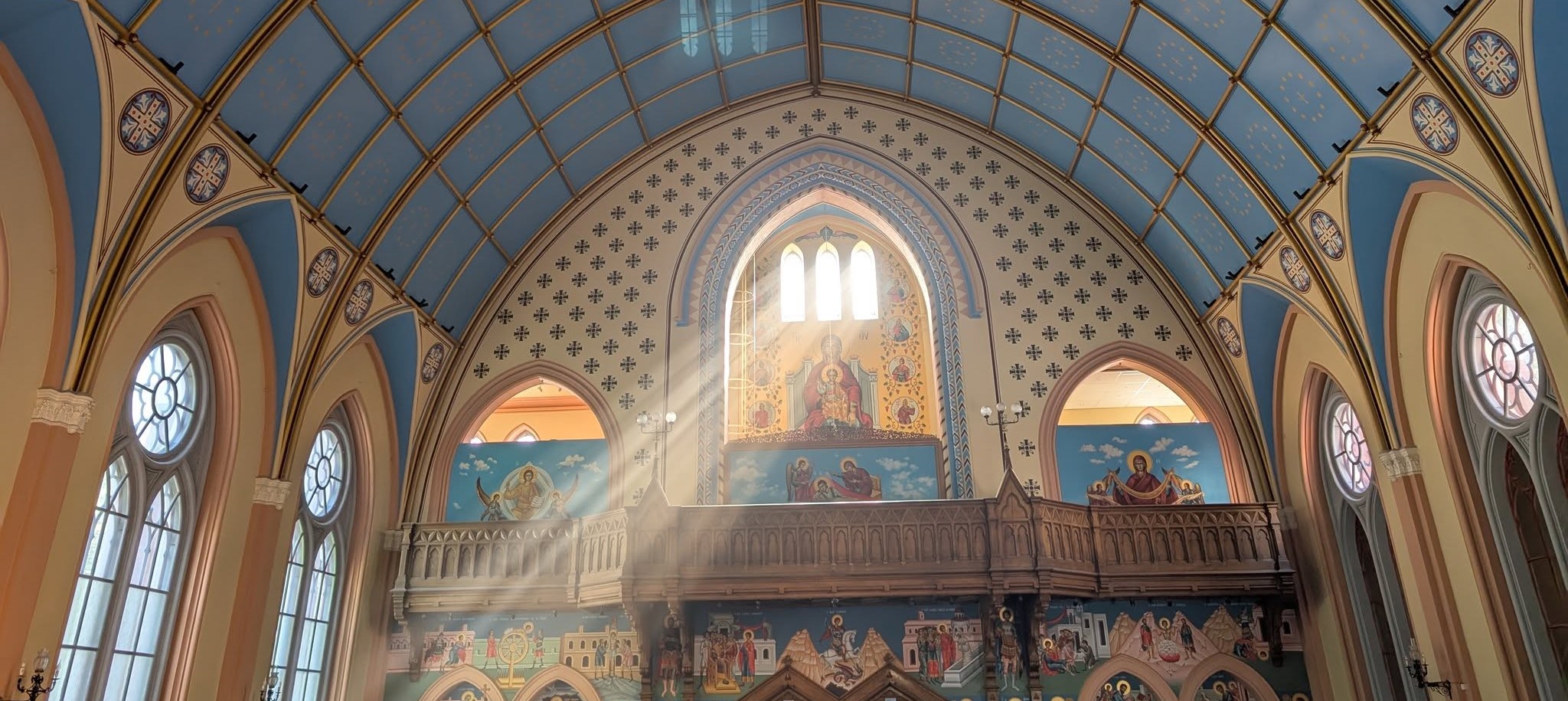
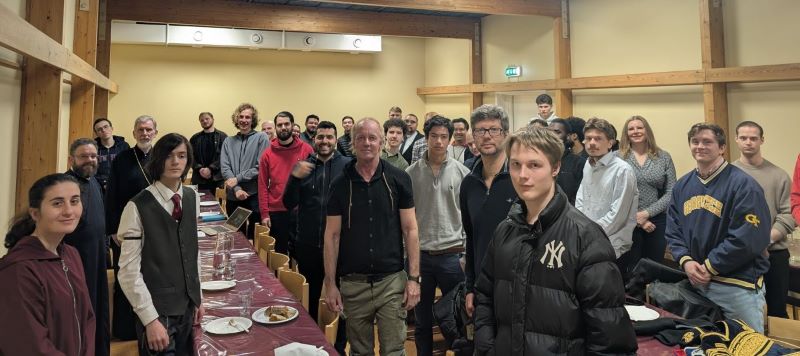
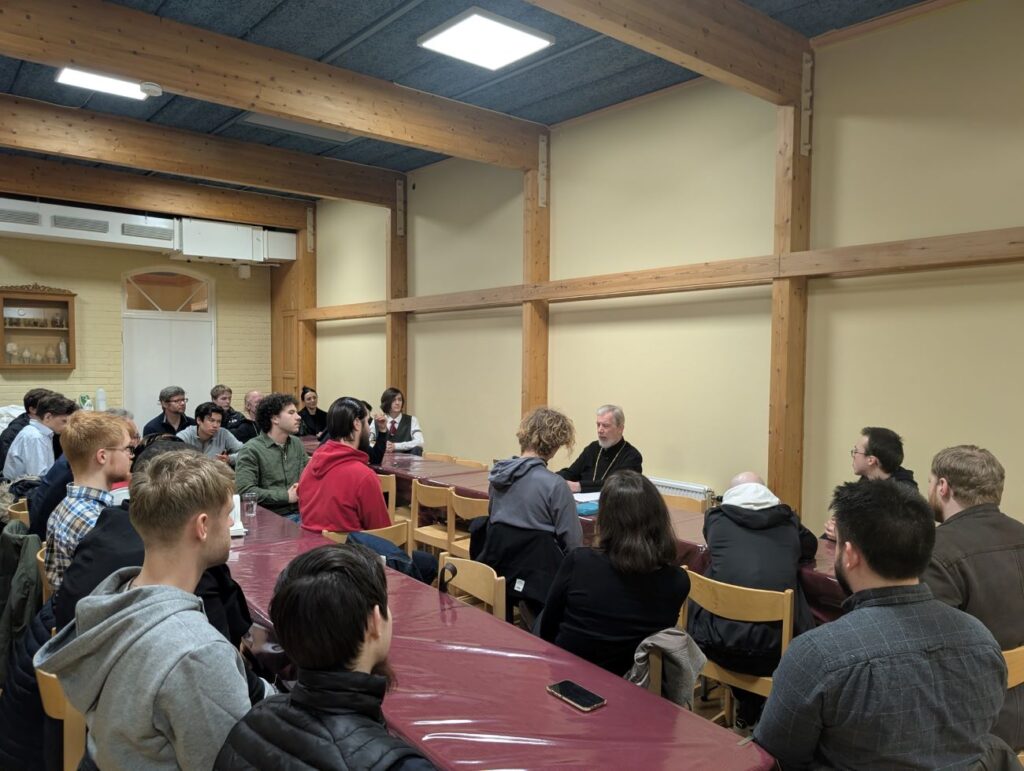
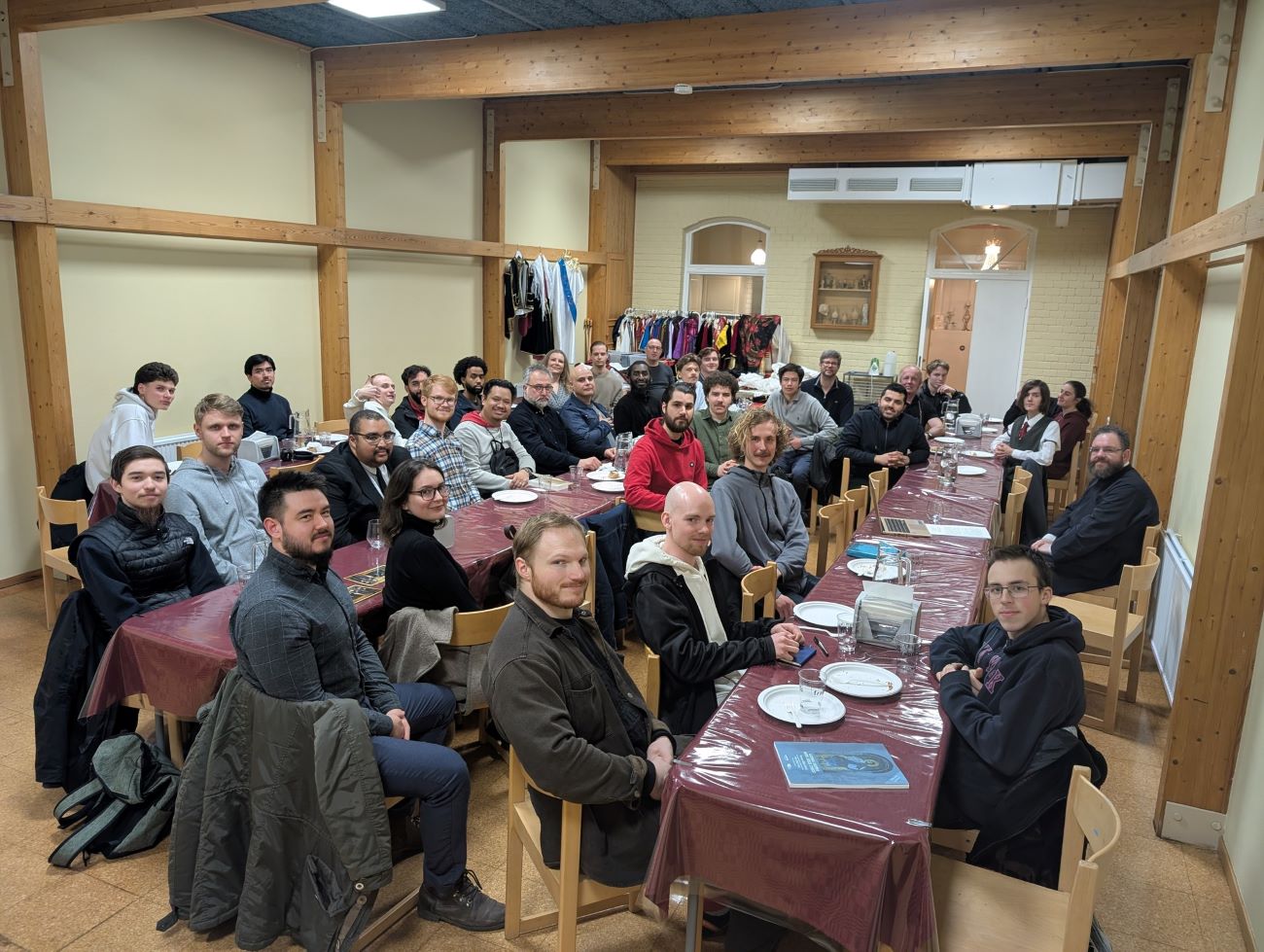
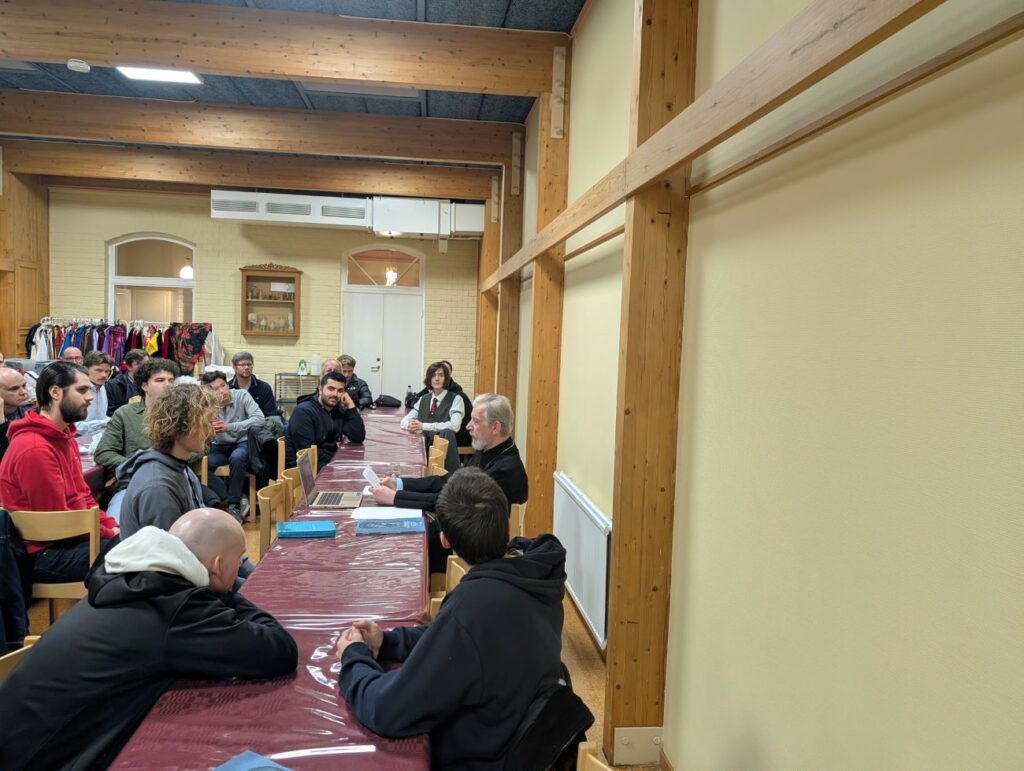
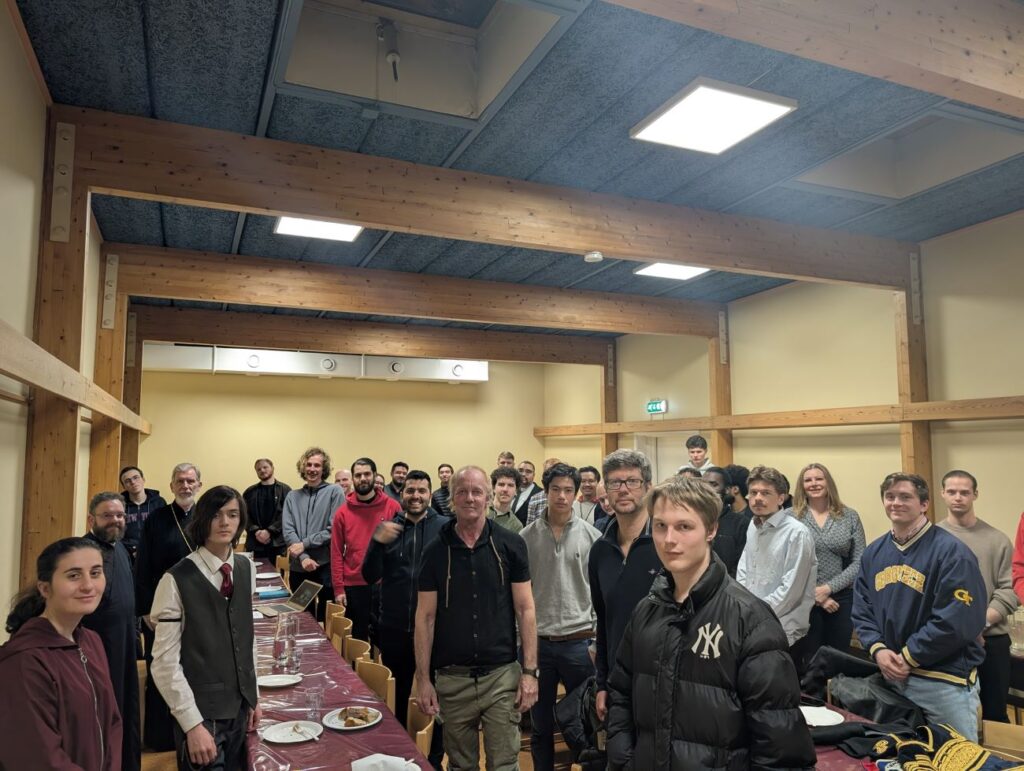
St. George Cathedral of Stockholm
Thursday, March 26, 2026
Topic: The Orthodox Church Under Persecution;
From the Apostolic Age to the Present
Introduction
Throughout its two thousand year history, the Orthodox Church has walked a path that is inseparable from sacrifice, suffering and witness.
From the earliest days when the Apostles were imprisoned and beaten, through the terrible persecutions under Roman emperors, the struggles under Islamic rule, the centuries of hardship under the Ottoman Empire and the suffering inflicted by totalitarian regimes in the twentieth century, the Church has never been free from tribulation.
Yet paradoxically, those trials have revealed the spiritual strength of Christianity and the profound truth of Christ’s words: “In the world you will have tribulation; but be glad, since I have overcome the world”.
Our Lord prepared His followers for this reality. In the Gospel of John He warns: “If they persecuted Me, they will also persecute you”. (John 15:20)
Saint Paul tells us that “all who desire to live a godly life in Christ Jesus will be persecuted”. (2 Timothy 3:12)
Persecution is not an accident of history; it is inseparable from authentic Christian life. The Greek word martyria means witness. The martyrs are those who bear witness to the truth of the Gospel, not only with their lips, but with their blood.
Today’s homily will trace this story across the centuries. We will begin with the Apostolic age and the first Roman persecutions, listen to the voices of the early Apostolic Fathers, who explained the theology of martyrdom, journey through the new challenges that arose after Christianity was legalized under Constantine, consider the experience of Orthodox Christians living under Islamic and Ottoman rule, reflect upon the “New Martyrs” of the twentieth century under atheistic regimes, and finally turn toward the contemporary world.
Throughout this journey, we will contemplate the spiritual meaning of persecution; how suffering unites us to Christ and transforms us for the Kingdom of God.
1. The Apostolic Era and the First Centuries
Persecution began almost immediately after the birth of the Church. The first Christian martyr was Saint Stephen, whose death around A.D. 34 is recorded in the Acts of the Apostles. (Acts 7) His final prayer—“Lord, do not hold this sin against them” (Acts 7:60)—echoes our Lord’s own words from the cross and sets the tone for Christian martyrdom; forgiveness and love even for one’s persecutors.
Soon afterwards St. James the Apostle was executed by Herod Agrippa (Acts 12:2), and according to early tradition Peter and Paul were martyred in Rome during Nero’s persecution around A.D. 64–67.
One of the earliest theological reflections on martyrdom comes from Saint Ignatius of Antioch (c. 35–107). On his journey to execution in Rome he wrote, “I am God’s wheat, and I shall be ground by the teeth of beasts, that I may become the pure bread of Christ”.
For St. Ignatius, martyrdom was not defeat but union with Christ; he begged the Roman Christians not to stop his martyrdom so that he could “attain to God”. (St. Ignatius of Antioch, Epistle to the Romans, 4)
Around the same period the aged Bishop Polycarp of Smyrna was arrested. When ordered to renounce Christ, he answered: “For eighty six years I have served Him, and He has done me no wrong. How can I blaspheme my King who saved me?” (Martyrdom of Polycarp, 9) Polycarp’s words became a model for countless believers.
During the second and third centuries, Christians remained illegal in the Roman Empire. Persecutions flared under emperors such as Trajan (98–117), Marcus Aurelius (161–180), Decius (249–251), and Diocletian (284–305).
The apologist Tertullian famously observed: “The blood of the martyrs is the seed of the Church”. (Apologeticum, 50) His phrase captures the early Christian conviction that the Church grows through suffering, not power.
This era produced many martyrs—men, women and children—whose names are known to God. Their witness preserved the faith when the Church had no worldly support.
2. The Theology of Martyrdom in the Early Church Fathers
To understand persecution we must turn to the spiritual wisdom of the Holy Fathers. Saint John Chrysostom (347–407), Archbishop of Constantinople, also experienced persecution and exile for criticizing corruption within the imperial court. Reflecting on the endurance of the Church, he wrote: “Οὐδὲν Ἐκκλησίας ἰσχυρότερον.” (“Nothing is stronger than the Church.”) (John Chrysostom, Homily on Isaiah, PG 56:139)
He also observed that persecution strengthens the Church: “Ὅσον πολεμεῖται ἡ Ἐκκλησία, τοσοῦτον λαμπρότερον γίνεται.” (“The more the Church is attacked, the more radiant she becomes.”) (Homilies on Acts, PG 60:162)
Saint John Chrysostom emphasised that persecution purifies the Church, writing, “The blood of the martyrs is the seed of the Church”. He insisted that the more violently the Church is struck, the more she grows; he compared persecution to waves striking a ship that is never submerged. (Homilies on the Acts of the Apostles)
Chrysostom taught that God allows trials to purify our souls “as gold is purified by fire”. (Homily on Romans) For him, the Church’s strength lies not in walls and weapons but in Christ.
In his reflections on the martyrs, Chrysostom described their courage as the result of divine grace: “The martyrs despised death because they saw a greater life. They endured torments because they looked toward the crown prepared for them.” (Homily on the Martyrs)
“For the martyrs, death was not a defeat but a passage to life; their suffering became the path to eternal glory.” “The trials sent by God are medicines for the soul, purifying it from corruption and leading it toward salvation.” (Letter 101)
He also emphasized that persecution reveals the authenticity of Christian faith: “Tribulation makes the faithful shine more brightly, as gold is purified by fire.”
Saint Basil the Great, who lived during the theological conflicts of the fourth century, compared martyrs to athletes who struggle for a crown that is eternal. In his Homily on the Forty Martyrs, he writes that the martyrs did not fear death because they had already learned to despise the world; they looked not at the pain of suffering but at the warmth of Christ’s love burning in their hearts. (Homily on the Forty Martyrs)
He explained that the trials permitted by God are medicines for the soul which purify us from corruption and lead us toward salvation. In this way, St. Basil teaches us that suffering, far from being meaningless, can heal us and bring us closer to God.
Saint Gregory the Theologian (329–390) offered one of the most profound theological reflections on martyrdom. In his orations honoring the martyrs, Gregory emphasizes that their witness reflects the sacrifice of Christ Himself. “Μάρτυρες γάρ εἰσιν οἱ τὸν Χριστὸν μιμούμενοι διὰ τῆς θυσίας τῶν σωμάτων.” (“For the martyrs are those who imitate Christ through the sacrifice of their bodies.”) (Oration 43, PG 36:520)
Saint Gregory also described the martyrs as the spiritual foundation of the Church: “Τὸ αἷμα τῶν μαρτύρων θεμέλιος τῆς Ἐκκλησίας γίνεται.” (“The blood of the martyrs becomes the foundation of the Church.”) (Oration 45, PG 36:661)
Saint Cyril of Alexandria teaches us that those who endure suffering for Christ demonstrate that nothing in this world is more precious than communion with Him. He explains that the strength of the martyrs comes, not from human courage, but from the grace of the Holy Spirit.
The Christological theology of Saint Cyril of Alexandria (c. 376–444) also contains reflections on the courage of the martyrs.
In his commentary on the Gospel of John, Saint Cyril writes: “Οἱ ὑπὲρ Χριστοῦ πάσχοντες δείκνυσιν ὅτι τὸ ἀγαπᾶν αὐτὸν ὑπὲρ πάντα τὰ ἐν κόσμῳ.” “Those who suffer for Christ show that loving Him is greater than all things in the world.” (Commentary on John, PG 73:161)
For Saint Cyril, martyrdom demonstrates the ultimate priority of communion with Christ over all earthly concerns.
One of the greatest defenders of Orthodoxy was Saint Athanasius the Great (c. 296–373), the champion of the Nicene faith against Arianism. Saint Athanasius endured five exiles between 335 and 366, due to political and theological opposition, for defending the Divinity of Christ.
In his Festal Letters, Saint Athanasius reflects on the spiritual victory of the martyrs: “Οἱ μάρτυρες τῇ τοῦ Χριστοῦ ἀληθείᾳ μαρτυροῦσι καὶ τὴν πίστιν αὐτῶν διὰ τῶν παθημάτων ἐπιδεικνύμενοι.”(“The martyrs bear witness to the truth of Christ and demonstrate their faith through their sufferings.”) (Festal Letter 39, PG 26:1437)
In another reflection on perseverance, he emphasized the spiritual victory hidden within suffering: “The Lord did not promise His disciples freedom from trials, but victory through them.” (On the Incarnation)
“Those who endure suffering for the sake of Christ show that nothing in this world is more precious to them than communion with Him.” (Commentary on John)
He further explains that persecution reveals the power of divine grace within the believer: “The strength of the martyrs does not arise from human courage but from the grace of the Holy Spirit who dwells within them.” (Commentary on Luke)
This unified witness of the Holy Fathers reveals several principles; persecution is inseparable from authentic Christian life; martyrdom is participation in Christ’s Cross; suffering purifies and strengthens the Church; faithfulness to truth is more important than worldly security; and the Church’s ultimate victory is spiritual, not political.
3. From Saint Constantine the Great to New Challenges
With the Edict of Milan (313), Christianity was legalized in the Roman Empire. The age of pagan persecution ended. However, new struggles arose. The Church now faced internal theological conflicts.
Saint Maximus the Confessor (c. 580–662) confronted the Monothelite heresy, which denied Christ’s two wills. For refusing to compromise, he was arrested, tried and brutally punished; his tongue and right hand were cut off.
At his trial he declared: “Κἂν πᾶσα ἡ οἰκουμένη κοινωνήσῃ τῷ πατριάρχῃ, ἐγὼ οὐ κοινωνῶ.” (“Even if the entire world should commune with the patriarch, I will not.”) (Acta Maximi Confessoris, PG 90:117)
Saint Maximus also wrote about the spiritual meaning of suffering for the truth: “Ἡ ἀγάπη τοῦ Θεοῦ ἐνισχύει τὸν ἄνθρωπον ὑπομένειν καὶ θλίψεις καὶ διωγμούς.” (“The love of God strengthens a person to endure afflictions and persecutions.”) “The one who loves God cannot help but love every human being as himself, even if he is grieved by the passions of those who are not yet purified.” (Maximus the Confessor, Four Hundred Texts on Love, PG 90:964)
Saint Maximus viewed suffering for the truth as participation in Christ’s own sacrifice. He wrote: “He who loves truth must be ready to suffer for it, for truth is revealed most clearly through those who endure suffering for God.” (Letters)
The Confessors remind us that persecution does not always take the form of physical death. Often it appears as exile, slander, or isolation for the sake of defending the truth of the faith.
Saint Maximus shows that persecution may come, not only from pagans, but also from emperors and religious authorities. He teaches that fidelity to truth is more important than human approval.
Despite this brutal punishment, his theological position was eventually vindicated at the Sixth Ecumenical Council (Constantinople III, 680–681).
Saint Gregory Palamas, Archbishop of Thessaloniki, lived during the fourteenth century, a time of both theological controversy and political instability within the Byzantine Empire. He is best known for defending the theology of Hesychasm, particularly the distinction between the essence and energies of God.
However, his defense of Orthodox spiritual tradition brought severe opposition. Palamas was imprisoned for several years during the controversy. Reflecting on suffering and spiritual struggle, Palamas wrote: “Through trials and afflictions the soul is purified, just as gold is purified in the furnace.” (Homily on the Entry of the Theotokos)
He also emphasized that the Christian life necessarily includes participation in the Cross: “If we wish to share in the glory of Christ, we must first share in His suffering.” (Homilies)
While Christianity enjoyed imperial favor, persecutions continued elsewhere. In the Sassanian Persian Empire, Christians were often suspected of loyalty to Rome and faced severe persecution; thousands were executed during the reign of Shapur II. Beyond the Roman world, the Church continued to bear witness through blood.
4. Byzantine Hagiography and the Synaxaria: Sources for the Martyr Tradition
The theological and spiritual understanding of martyrdom in the Orthodox Church is preserved, not only in theological treatises, but also in liturgical and hagiographical sources, particularly the “Synaxarion” (Συναξάριον) and Byzantine martyrdom narratives known as the “Passiones” or “Passions of the Martyrs.”
The Synaxarion of Constantinople, compiled between the 9th and 10th centuries, contains brief accounts of the lives and martyrdoms of saints arranged according to the liturgical calendar. These texts became central to the daily liturgical remembrance of martyrs in the Byzantine Church.
The Synaxarion describes martyrdom as a participation in the suffering of Christ and frequently emphasizes the divine grace that strengthens the martyrs during persecution.
A typical Synaxarion formula reads: “Ὁ ἅγιος μάρτυς ἐν τῇ ὁμολογίᾳ τοῦ Χριστοῦ ἀνδρείως ἠγωνίσατο.” (“The holy martyr struggled courageously in the confession of Christ.”)
(Synaxarium Constantinopolitanum, Acta Sanctorum, November vol., Propylaeum)
Byzantine martyrdom texts often emphasize three theological themes: Imitation of Christ’s Passion; Divine assistance through grace; Victory through apparent defeat.
Modern scholarship has emphasized that these narratives were, not merely devotional literature, but also theological texts, shaping Christian identity.
Studies of Byzantine hagiography note that martyr narratives portray saints as spiritual athletes whose endurance reveals divine power rather than human heroism.
These texts helped transmit the theology of martyrdom, from the early Church into the Byzantine and post-Byzantine periods.
5. The Theology of Martyrdom in Saint Gregory Palamas and the Hesychast Tradition
One of the most important theological developments in late Byzantine spirituality occurred during the Hesychast controversy of the 14th century, in which Saint Gregory Palamas (1296–1359) defended the spiritual tradition of contemplative prayer, practiced by the monks of Mount Athos.
Although Palamas is best known for articulating the distinction between the Divine essence (οὐσία) and Divine energies (ἐνέργειαι), his theology also deepened the Orthodox understanding of suffering, ascetic struggle, and spiritual transformation.
In his work “Against Akindynos,” Palamas explains that believers participate in the divine life, not through God’s essence, but through His energies: “Θεὸς φῶς ἐστίν, οὐ κατ᾽ οὐσίαν ἀλλὰ κατ᾽ ἐνέργειαν.” (“God is Light not according to His essence but according to His energy.”) (Gregory Palamas, Contra Akindynum, PG 150:823A)
This teaching has important implications for the theology of martyrdom. For Palamas, the saints and martyrs participate in the uncreated divine energies, which enable them to endure suffering and attain union with God.
Hesychasm emphasized purification of the heart, illumination of the mind, and participation in divine grace through prayer and ascetic struggle.
Palamas also describes spiritual struggle as a living sacrifice offered to God: “The passionate power of the soul must be offered to God alive as a sacrifice.” (Palamas, Hesychastic Treatises)
This language echoes the Apostolic teaching in Romans 12:1 and connects martyrdom with the broader ascetic life of the Church.
Thus, in the Palamite tradition, martyrdom represents the culmination of the ascetic struggle. The martyr is the one who offers, not only prayer and fasting, but his entire life as a sacrifice of love.
The Hesychast theology therefore integrates martyrdom into the wider spiritual life of the Church: purification, illumination, and deification (θέωσις).
6. The Neo-Martyrs in Byzantine and Post-Byzantine Tradition
The rise of Islam in the seventh century transformed the religious landscape. Many historic Christian centers—including Antioch, Jerusalem and Alexandria—fell under Islamic rule. Christians were recognized as dhimmī (protected peoples) but were subject to restrictions and heavy taxes.
Despite these difficulties, the Orthodox Church survived and produced saints and theologians. The faithful learned to live as a minority while maintaining their identity.
The Fall of Constantinople in 1453 marked a profound turning point. Under Ottoman rule the Ecumenical Patriarchate of Constantinople continued to function, but Orthodox Christians often faced pressure to convert to Islam.
The lives of the saints/martyrs were preserved in post-Byzantine hagiographical collections such as:
• The New Martyrology of Saint Nicodemus of the Holy Mountain (Νέον Μαρτυρολόγιον, 1799)
• Regional Synaxaria and liturgical commemorations
These texts continued the Byzantine tradition of martyr narratives. One example is Saint George of Ioannina (†1838), whose martyrdom is recorded in the Synaxarion for January 17.
The Synaxarion describes his steadfast confession: “Οὐκ ἀρνοῦμαι τὸν Χριστόν· χριστιανὸς γεννήθηκα καὶ χριστιανὸς ἀποθνῄσκω.” (“I do not deny Christ; I was born a Christian and I die a Christian.”) (Synaxarion entry for St. George of Ioannina)
Another major figure is Saint Kosmas the Aetolian (1714–1779), a missionary monk who travelled across the Balkans encouraging Orthodox education and faith.
The Neo-Martyrs played a crucial role in preserving Orthodox identity during centuries of foreign rule. Their witness strengthened Christian communities and provided powerful examples of faithfulness.
7. The Twentieth Century: New Martyrs Under Totalitarian Regimes
The twentieth century brought one of the greatest waves of persecution in Christian history. Following the Russian Revolution, the Soviet regime launched a systematic campaign against religion. Churches were destroyed, monasteries closed, clergy imprisoned, and believers executed. By the mid twentieth century tens of thousands of Orthodox clergy and faithful had been killed. Similar atrocities occurred in Eastern Europe under communist regimes.
The theology of martyrdom has also been revisited by modern Orthodox theologians, particularly during the 20th-century revival of patristic theology. One of the most influential figures in this movement was Fr. Georges Florovsky (1893–1979).
Florovsky argued that Orthodox theology must return to the spiritual and theological vision of the Church Fathers through what he called a “neopatristic synthesis.” For Florovsky, the witness of the martyrs was inseparable from the living tradition of the Church.
Similarly, Vladimir Lossky (1903–1958) emphasized that the experience of suffering and sacrifice is part of the Christian path toward deification (θέωσις). Lossky writes in The Mystical Theology of the Eastern Church: “The way to union with God is the way of the Cross.”
Another major figure was Fr. John Meyendorff (1926–1992), whose scholarship on Byzantine theology—especially on Gregory Palamas—helped restore the central place of Hesychast spirituality in Orthodox thought.
Meyendorff demonstrated that Palamas’ theology was not an innovation but a faithful expression of the patristic tradition.
The Romanian theologian Fr. Dumitru Stăniloae (1903–1993), who endured imprisonment in Romania, integrated these patristic insights into a comprehensive modern theology of spiritual life. Stăniloae emphasized that martyrdom is the ultimate expression of love for God: “Love reaches its highest form when a person is ready to sacrifice everything for Christ.” “Suffering endured for Christ purifies the soul and reveals the true depth of faith”. “When faith is tested by suffering, it becomes purified and shines with greater clarity.” (The Experience of God) For Stăniloae, persecution is not only an injustice; it is a crucible that strips away self love and deepens communion with God.
St. Justin Popović (1894–1979) described atheistic communism as “a rebellion against God that seeks to replace Christ with man”. “Every age produces its martyrs, because every age attempts in its own way to silence Christ.” (Orthodox Faith and Life in Christ) He insisted that worldly powers may imprison or kill the body, but they cannot extinguish the light of faith.
Father Alexander Schmemann emphasized that the true strength of the Church is not political power but faithfulness to the Gospel. The Church must never trust in worldly systems; her life is hidden in God.
These modern voices remind us that the martyrs of the twentieth century are not merely victims of history but triumphant witnesses who reveal the victory of Christ over oppressive ideologies.
8. Persecution in the Contemporary World
Even today, persecution has not ended. In the Middle East, ancient Christian communities have suffered greatly due to war, extremism and political instability. Churches have been destroyed, clergy kidnapped and communities displaced. Yet many Orthodox Christians remain steadfast in their faith. Their witness reminds us that the age of martyrdom continues; the Church is called to bear the cross in every generation.
In other parts of the world, more subtle forms of persecution arise through cultural pressure, ridicule of faith and attempts to marginalize religious voices. Our brothers and sisters who experience these trials teach us perseverance.
9. The Spiritual Meaning of Persecution
Why does God allow His Church to suffer? The Orthodox understanding of persecution is deeply connected to the Cross and Resurrection of Christ. Christ warns us: “If they persecuted Me, they will also persecute you”.
Yet persecution does not have the final word. The Resurrection transforms suffering into victory. The martyrs are not victims of history but triumphant witnesses of eternal life.
As St. Ignatius of Antioch showed us, martyrdom is not destruction but transformation; through suffering we become the pure bread of Christ.
The Holy Fathers teach that persecution purifies the Church. St. John Chrysostom compares tribulation to a furnace that makes gold shine more brightly.
St. Gregory Palamas writes that “through trials and afflictions the soul is purified, just as gold is purified in the furnace”. Palamas insists that if we wish to share in Christ’s glory, we must first share in His suffering. In the hesychast tradition, martyrdom is not an isolated event but the culmination of the ascetic struggle; prayer, fasting, purification of the heart and final offering of one’s life.
Persecution also reveals the authenticity of the Church. Throughout history, the Church has flourished most profoundly when she lacked earthly power. The martyrs, confessors and ascetics, who endured suffering for the sake of truth, demonstrate that faith in Christ is stronger than fear. They show that nothing in this world—neither wealth, status, nor even life itself—is more valuable than communion with God.
The martyrs forgive those who torture them; they bless those who curse them. By doing so, they manifest the mind of Christ, who from the cross prayed, “Father, forgive them” (Luke 23:34).
10. What does this long history mean for you as you prepare to enter the Orthodox Church?
a. Expect the Cross
First, know that baptism into Christ is baptism into His death and resurrection (Romans 6). To follow Christ means to take up the cross daily.
Do not be surprised if following Him brings trials, misunderstandings, or ridicule. Christ Himself promised that His followers would be hated by the world. The lives of the saints show that tribulations are part of the Christian journey.
Yet do not fear; the cross always leads to resurrection!
b. Faith over Fear
The martyrs teach us that faith is stronger than fear. When our hearts are anchored in Christ, we can endure any hardship. Persecution tests the genuineness of faith; it reveals whether we truly believe that Christ is risen and that eternal life awaits those who love Him.
Do not allow difficulties to shake your trust; instead, see them as opportunities to deepen your love for God.
c. Witness in Everyday Life
Most of us will not be called to shed our blood for Christ. Yet all are called to witness (martyria) each day.
Witness when you pray for those who wrong you.
Witness when you speak the truth in love at work or school.
Witness by living with integrity, by refusing to compromise your conscience for social approval.
Remember that the greatest testimony of the martyrs was their forgiveness, joy and peace amid suffering. Ask God to give you that same spirit.
d. Solidarity with the Persecuted
Our brothers and sisters around the world continue to suffer. We must remember them in prayer and offer material support when possible. As members of one Body, we cannot be indifferent when a part of the Body is wounded.
Pray for the ancient churches of the Middle East, for those imprisoned for their faith, for those who have lost homes and loved ones. Their witness encourages us; our prayers and support strengthen them.
e. Hope in Christ’s Victory
Above all, keep your eyes fixed on Christ. The martyrs endured because they looked beyond this world to the crown prepared for them. They knew that life in Christ is stronger than death.
Do not let the injustices of this world make you bitter or hopeless. Christ has overcome the world. In Him, the Church is stronger than any empire.
As Saint John Chrysostom declares: “Nothing is more powerful than the Church. Empires fall, but the Church remains”. (Homily on Isaiah, PG 56)
Conclusion
Looking across twenty centuries, we see a consistent pattern; persecution has accompanied the Orthodox Church from the beginning. From Saint Stephen and Saint Polycarp, through the Neo Martyrs under Ottoman rule and the New Martyrs of the twentieth century, and even to suffering Christians today, the Church has continually produced witnesses who proclaim that Christ is risen and that His love is stronger than death. Every wave of suffering has revealed new saints, new examples of faith and courage.
The Orthodox Church survives, not because of political protection or worldly strength, but because Christ Himself lives within His Body, the Church. Therefore, the witness of the martyrs continues to speak to us today: Faith is stronger than fear. Truth is stronger than power. Life in Christ is stronger than death.
Stand firm in the faith; embrace the cross; love your enemies; pray without ceasing. Through your perseverance in trials, whether small or great, you will not only be joining the Church of the martyrs, but you will be participating in the very life of Christ.
And like the saints before you, you will discover that nothing can separate us from the love of God in Christ Jesus our Lord (Romans 8:38–39).
May the prayers of the Holy Martyrs strengthen us all, and may the grace of our Lord Jesus Christ, and the love of God the Father and the communion of the Holy Spirit be with all of you always!