



By H.E. Metropolitan Cleopas of Sweden
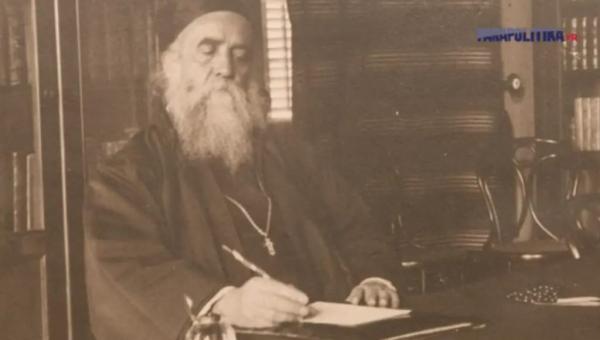
Today, on the 7th Sunday of the Gospel of Luke, we hear the wondrous account of the healing of the woman with the issue of blood and the raising of the daughter of Jairus, the ruler of the synagogue. And on this same day, the Church also sets before us the holy and wonder-working Saint Nectarios of Pentapolis, that radiant vessel of humility, patience, and unwavering faith in Christ.
How fitting are these commemorations together—for in both the Gospel and in the life of St. Nectarios, we behold the interplay of faith, suffering, patience, and divine healing.
The Evangelist tells us that for twelve years, this woman suffered a flow of blood, a condition that not only caused terrible physical weakness, but also rendered her religiously unclean and socially isolated. She bore physical pain, emotional humiliation, and spiritual loneliness.
She did not demand attention, nor cry out publicly, but said in her heart: “If I only touch the edge of His garment, I shall be made well.”
Her healing began not with touch, but with faith. Christ did not ask, “Who touched Me?” because He lacked knowledge, but to reveal her faith publicly, so that others, like us today, might be strengthened by her example.
Jairus, the ruler of the synagogue, approached Christ openly. While the woman showed silent faith, Jairus showed public faith. But his faith, too, was tested. When the news came that his daughter had died, those around him said: “Do not trouble the Teacher anymore.”
But Christ answered him: “Do not fear. Only believe.”
Saint Basil the Great teaches: “Faith is not the absence of sorrow, but the refusal to surrender to it.”
Jairus continued walking with Christ—even when the world told him it was hopeless. Christ, who is the Giver of Life, entered the house of mourning and transformed it into a house of resurrection.
In Saint Nectarios of Pentapolis, whose memory we commemorate today, we see both the silent endurance of the suffering woman and the steadfast faith of Jairus.
He was falsely accused, slandered, exiled, misunderstood, and humiliated. Like the woman, he suffered in silence. Like Jairus, he kept walking with Christ when others told him to give up.
Saint Nectarios did not allow bitterness to take root in his heart. Instead, he prayed for his accusers and thanked God for every trial. His very life teaches us that holiness grows where there is patience in suffering. God glorified him, not during his earthly life, but after death, just as the Lord raised Jairus’ daughter.
Today, thousands travel to his monastery in Aegina—wounded in body and soul—and they find healing through his intercessions. As the woman touched the garment of Christ, so the faithful now touch the relics of St. Nectarios and they are healed. For the saints are the hands of Christ stretched forth into our time.
The Gospel invites us to examine our faith today. Do we pray as the suffering woman prayed—quietly, persistently, with humility? Do we walk with Christ as Jairus did, even when circumstances seem hopeless? Do we endure injustice and hardship as St. Nectarios did, without anger, trusting in the judgment of God?
We, too, have illnesses—some of the body, many of the heart: resentment, anxiety, depression, impatience, fear. Let us come to Christ—not demanding, but trusting!