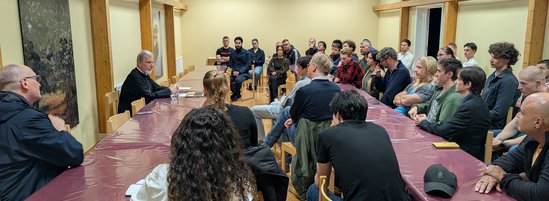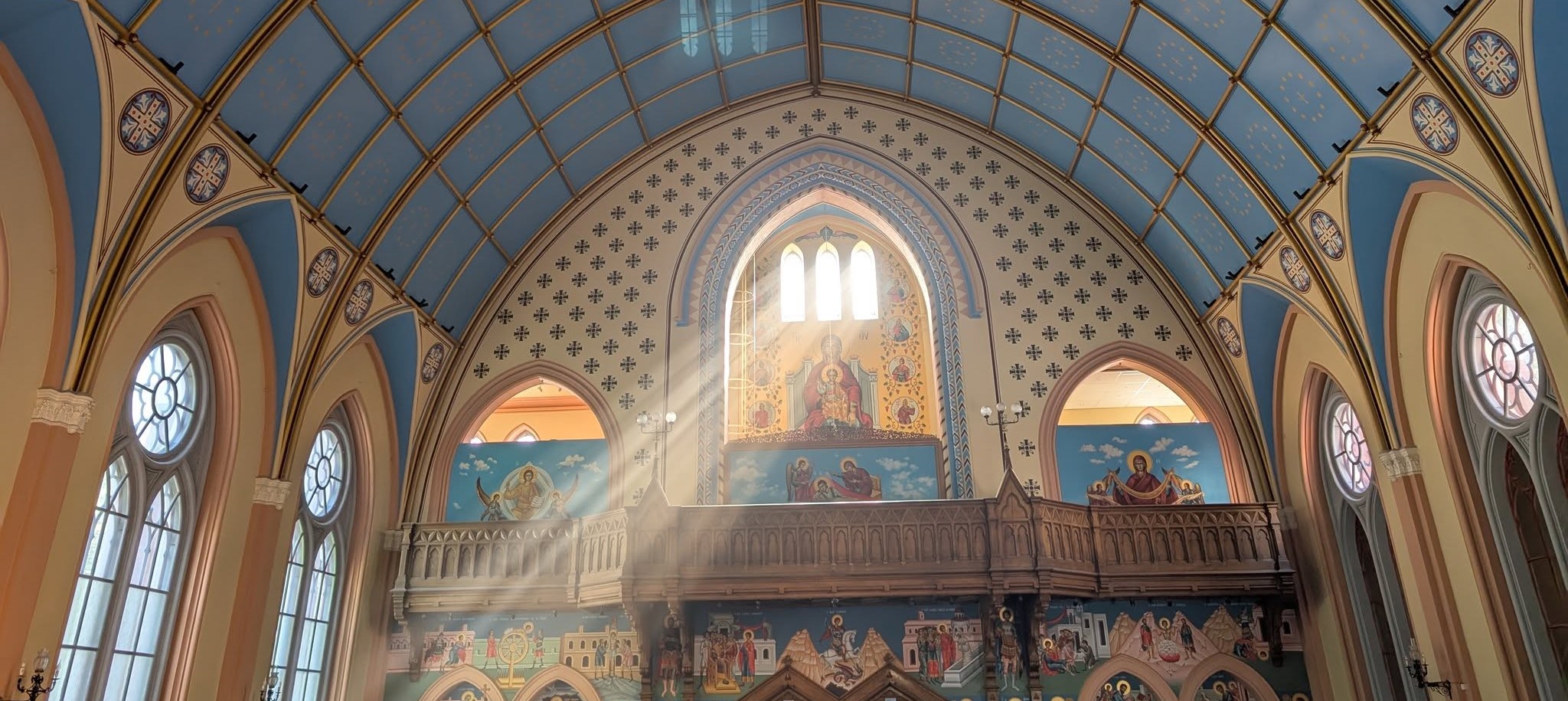
St. George Cathedral of Stockholm
Thursday, May 7, 2026
Topic: “The Miracles of Christ: Signs of Compassion and Salvation”
1. Introduction: Miracles as Revelations of Divine Love
In the four canonical Gospels we encounter our Savior whose compassion is expressed, not only through words, but also through acts that transcend ordinary human experience.
The four Evangelists describe Christ healing the sick, calming storms, casting out demons, turning water into wine, feeding hungry crowds, and even raising the dead.
The Orthodox tradition calls these extraordinary acts miracles (in Greek θαύματα), yet the Church Fathers remind us that they are not mere wonders designed to entertain or satisfy curiosity.
St John of Damascus wrote that “every action, therefore, and performance of miracles by Christ are most great and divine and marvellous,” but he added that “the most marvellous of all is His precious Cross, because only the Cross subdues death, expiates sin and opens the gates of Paradise.”
From the outset we must therefore understand Christ’s miracles as signs that point beyond themselves to His identity and to His saving work on the Cross.
The nature of miracles was carefully considered by early Christian thinkers. St Augustine of Hippo observed that we speak of miracles when events surpass our normal expectations, yet nothing God does is truly “contrary” to nature.
In “The City of God,” he argues that “how can anything done by the will of God be contrary to nature, when the will of the Creator constitutes the nature of each created thing?” For him, what occurs is “not contrary to nature, but contrary to what is known of nature”.
The Coptic Church elaborates on this distinction by noting that if a blind person spontaneously receives sight, this is a miracle, because there is no human explanation; whereas the removal of a kidney stone through surgery is not a miracle because the cause is understood. God, who created natural laws, sometimes suspends or transcends them out of love for humanity.
Miracles are connected with faith and salvation. Apostle John ends his Gospel by saying that many other signs Jesus did “are not written in this book,” but those recorded here are written “that you may believe that Jesus is the Christ, the Son of God, and that believing you may have life in His name”.
Contemporary Orthodox theologians remind us that Christ’s miracles must be understood in their scriptural and historical context; they reveal the deeper meaning of Christ’s life and the true identity of Jesus Christ, our Lord and Savior. They are not random acts of power; they are signs that disclose who Jesus is and invite us into a relationship with Him.
In this seminar, we will explore the miracles of Christ, as described in the four Gospels, drawing on the insights of the Orthodox Church Fathers and modern theologians. Our focus is two fold: first, to appreciate the historic events recorded by the evangelists; second, to discern their impact on our lives and on our salvation.
We will see that Christ’s miracles are diverse—healing illnesses, casting out demons, feeding the multitudes, and raising the dead—yet all of them converge on the miracle of the Cross and the resurrection, which bring about the transformation of the human person.

2. Why Christ Performs Miracles? Signs to Inspire Faith
The Gospel authors agree that Jesus did not perform miracles to astonish or dazzle people. When tempted by the devil in the wilderness to “turn stones into bread” or to leap from the pinnacle of the Temple, Jesus refused. He declined Herod’s request for a wonder (Luke 23:8) and would not descend from the Cross despite taunts from the crowd.
The Coptic reflection on miracles explains that Jesus performed miracles when they served a clear salvific purpose; He refused those that merely satisfied curiosity or circumvented His mission.
As He Himself said, “An evil and adulterous generation seeks after a sign, and no sign will be given to it except the sign of the prophet Jonah” (Matthew 12:39). The only definitive “sign” for unbelievers is His death and resurrection.
St John the Theologian explicitly connects miracles with faith: “These signs are written that you may believe that Jesus is the Christ, the Son of God”.
Miracles therefore function as epiphanies of Christ’s identity. They reveal Him as the Word through whom all things were made, the New Moses who transforms water into wine and multiplies loaves, the Good Shepherd who raises the dead.
Reading the miracles within their scriptural context, helps us see patterns in Christ’s actions and understand what they teach us about Jesus, “in ways faithful to the tradition of the church”.
Miracles also reveal Christ’s compassionate love. In the Gospel of John, the Lord heals the paralytic at Bethesda, who had waited for thirty eight years (John 5:1 9) and the man born blind (John 9:1 41) without being asked.
In both cases, His action leads the healed person to confess faith in Him (John 5:14; 9:38). When Jesus feeds five thousand with five loaves and two fish, He cares for hungry people and then interprets the miracle spiritually: “Do not labour for the food which perishes, but for the food which endures to everlasting life” (John 6:26 27).
The miracle points to the Eucharist—“I am the living bread which came down from heaven” (John 6:51), and invites people to seek eternal nourishment.
The Church Fathers emphasise that Jesus performed miracles out of love and not for self glorification. St John Chrysostom remarks that the greatest miracles are those of inner transformation; he calls sin “a great demon” and teaches that uprooting sin from the heart is a greater miracle than casting out demons.
This spiritual emphasis helps us avoid a superficial fascination with wonders. Instead, we are called to see miracles as manifestations of God’s mercy, meant to lead us to repentance and new life.
3. Categories of Christ’s Miracles
3.1. Miracles of Transformation and Provision
3.1.1. The Wedding at Cana
Jesus’ first public miracle occurred at a wedding feast in Cana. When the wine ran out, His Mother asked Him to help. St John records that Jesus initially told her “My hour has not yet come”, but then instructed the servants to fill six stone water jars with water, which He transformed into high quality wine.
The Evangelist comments: “This first of His miracles Jesus did in Cana of Galilee and manifested His glory, and His disciples believed in Him”. Fr Lawrence Farley of the Orthodox Church in America notes that this miracle reveals the essence of discipleship and faith: Mary, though the Mother of God, humbly accepted Jesus’ timing and said to the servants, “Whatever He says to you, do it”. Her obedience is a model for all believers.
Fr. Farley also interprets the water pots (used for Jewish purification) as symbols of the old covenant; the wine of the miracle represents the new life of the Kingdom, where Christ Himself is the true Bridegroom.
3.1.2. The Feeding of the Multitudes
All four Gospels recount Jesus’ feeding of crowds with a few loaves and fish (cf. Matthew 14:13 21; Mark 6:30 44; Luke 9:10 17; John 6:1 14). After this miracle the people wanted to make Him king. Jesus withdrew and later explained that the miracle signified the gift of Himself.
The Coptic teaching warns that the crowd misunderstood; they “sought Him because they ate of the loaves and were filled”. Christ corrected them, urging them to desire the bread of life rather than worldly satisfaction.
The Church Fathers see in this miracle a prefiguration of the Eucharist, in which Christ continually feeds His people with His Body and Blood.
3. 2. Healing Miracles
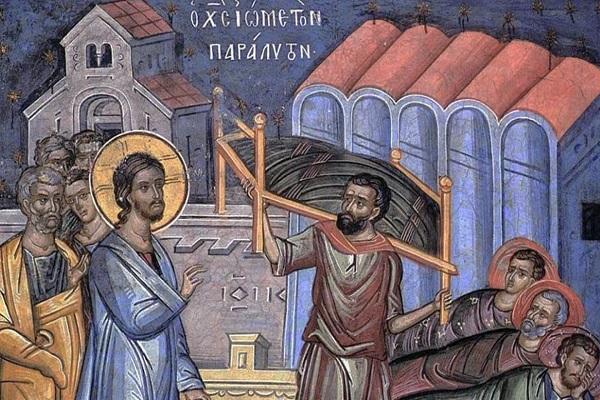
3.2.1. Healing the Paralytic at the Pool
In John 5, Jesus heals a man who had been paralysed for thirty eight years. He simply commands, “Rise, take up your bed and walk.” An article explains that Jesus performed this miracle on the Sabbath and defended His action by declaring, “My Father has been working until now, and I have been working”.
By linking His work to the Father’s, Christ reveals His divine authority. When challenged by the Jewish leaders, He points them beyond legalistic Sabbath observance to the ongoing work of God in healing and salvation.
3.2.2. Healing the Man Born Blind
On the sixth Sunday of Great Lent, the Orthodox Church reads the story of Christ healing a man blind from birth (John 9:1 41). Jesus gives the man sight without being asked. This miracle leads the formerly blind man to confess his faith: “Lord, I believe!” and worship Jesus.
The healing not only restores physical sight but also serves as a metaphor for illumination; the spiritual awakening of the soul. St John Chrysostom emphasises that such inner enlightenment, the opening of the eyes of the heart, is a greater miracle than physical healing.
3.3. Other Healings
Throughout the Gospels, Christ heals lepers, restores hearing to the deaf, straightens the woman bent, cures fevers and infirmities. Each act demonstrates His compassion and authority over sickness.
Importantly, Jesus does not treat miracles as the main purpose of His mission; He often tells those healed to “tell no one” (Mark 1:44) and warns the crowds not to focus solely on wonders. The Fathers note that physical healings are signs of the greater healing of the soul, accomplished through repentance and union with God.
3.4. Miracles of Exorcism
3.4.1. Casting Out a Dumb Demon
St. Luke records that Jesus cast a demon out of a man who was mute (Luke 11:14). St Cyril of Alexandria explains that the man suffered, not because of a natural defect, but because “his tongue was as it were tied” by the devil.
Jesus healed him without demanding faith, demonstrating divine compassion. The crowd marvelled, but some scribes and Pharisees maliciously attributed the miracle to Beelzebub, the prince of demons.
St. Cyril notes that Christ reproved them by revealing their thoughts and by reasoning that a kingdom divided against itself cannot stand. He declared that He cast out demons by the “Finger of God”, meaning the Holy Spirit, and that this miracle proved that “the kingdom of God is coming upon you”. Exorcisms therefore attest to Jesus’ victory over Satan and the arrival of God’s reign.
3.4.2. Delivering Others from Demons
Christ liberated many people who were tormented by unclean spirits: the Gerasene demoniac (Mark 5:1 20), the boy with an epileptic spirit (Mark 9:14 29), and Mary Magdalene (Luke 8:2).
Each deliverance signified the defeat of evil powers and the liberation of human beings. St John Chrysostom warns, however, that seeking spectacular exorcisms can distract from the more urgent task of casting out the demon of sin from our own hearts. True spiritual warfare involves repentance, prayer and ascetic struggle.
3.5. Nature Miracles
3.5.1. Calming the Storm and Walking on Water
When a storm threatened to sink the disciples’ boat, Christ commanded the winds and waves to be still (Mark 4:35 41; Luke 8:22 25).
At another time, He came to His disciples walking on the Sea of Galilee (Matthew 14:22 33). These miracles evoke the Old Testament portrayal of God as the One who rules the sea (Psalm 89:9). They reveal Jesus’ dominion over creation. In both stories, His words “Do not be afraid” underline that faith dispels fear. The disciples respond with awe, confessing that He is truly the Son of God.
3.5.2. The Great Catch of Fish
On two occasions, Jesus instructed fishermen to cast their nets after a futile night and they caught a great quantity of fish (Luke 5:1 11; John 21:1 14). These miracles symbolise the missionary work of the apostles: they will become “fishers of people.” The abundance points to the overflowing grace of God and the harvest of souls that the Church will gather.
3.5.3. Withering the Fig Tree
On His way to Jerusalem, Jesus cursed a barren fig tree, which then withered (Matthew 21:18 22). The Church Fathers interpret it as an admonition to produce the fruits of repentance before the day of the Lord. Even here, the miracle calls for inner transformation rather than mere curiosity.
3.6. Raising the Dead
3.6.1. The Daughter of Jairus and the Widow’s Son
Jesus raised Jairus’ twelve year old daughter (Mark 5:35 43) and the only son of the widow of Nain (Luke 7:11 17). He touched them or addressed them directly, and they returned to life. In each case the miracle reveals Christ’s authority over death and His compassion for grieving families.
The people responded by glorifying God and recognising that “a great prophet has arisen among us” (Luke 7:16).
3.6.2. The Raising of Lazarus
The resurrection of Lazarus, commemorated on Lazarus Saturday, is considered by the Church Fathers the greatest miracle before Christ’s Passion. Jesus performed this miracle to strengthen His disciples before His coming Passion.
St. John Chrysostom calls it a “luminous triumph,” leading up to the Resurrection; he writes that Christ, in raising Lazarus, defeats the power of death, fills the world with His miracles and gives us “an image of His Resurrection”.
Blessed Theophylact adds that Christ’s loud voice calling Lazarus from the tomb symbolises the trumpet that will sound at the resurrection of all humanity.
The raising of Lazarus, thus, prefigures the general resurrection and demonstrates that Christ is “the Resurrection and the Life” (John 11:25).
The event also provoked the hostility of the authorities, who plotted to kill, both Jesus and Lazarus, showing that miracles can harden hearts, as well as inspire faith.
The Fathers also interpret the Lazarus miracle allegorically. Blessed Theophylact explains that Lazarus represents the human mind deadened by sin; his sisters, Mary and Martha, symbolize the soul’s faculties that appeal to Christ.
When the Lord commands the stone to be removed and cries “Lazarus, come forth!” He calls us to abandon the tomb of worldly passions and rise to a new life. This interpretation invites us to see every miracle as a call to spiritual resurrection.
4. The Cross as the Ultimate Miracle
While Christ’s miracles are diverse, the Holy Fathers insist that they all point to the mystery of the Cross and Resurrection. St John of Damascus emphasises that the Cross is the most marvellous of all miracles, because through it, death is overthrown, sin is expiated and human nature is exalted to sit at the right hand of God.
This miracle is more wondrous than turning water into wine, or healing the sick, because it transforms humanity itself, restoring our communion with God.
Jesus refused to come down from the Cross despite mockery. His endurance reveals that true power is manifested in self emptying love.
Apostle Paul teaches that miracles are insignificant without love: “If I have all faith so as to remove mountains, but have not love, I am nothing” (1 Corinthians 13:2). Thus the greatest miracle is not a spectacular sign, but the transformation of the heart through love and repentance.
5. The Purpose of Miracles in Our Lives
5.1. Faith Leading to Salvation
The primary purpose of Christ’s miracles is to lead us to faith. St John writes that those who believe in Jesus have eternal life, while those who refuse Him remain under judgment. Miracles strengthen faith in those disposed to believe, but they cannot compel faith; the same miracle that converts one person may harden another.
This is evident in the reaction to Lazarus’ resurrection; many believed, yet the chief priests plotted to kill both Lazarus and Jesus.
Miracles call us, not only to acknowledge Christ, but also to repent and amend our lives. St John Chrysostom teaches that the expulsion of sin from the heart is a greater miracle than casting out demons. He gives practical examples: freeing oneself from the “small devil” of smoking can be more difficult than healing a paralysed limb.
The Fathers urge us to pursue the miracles of virtue—forgiving enemies, giving alms, abstaining from vice—which require cooperation with divine grace.
6. Loving as the Sign of Discipleship
Christ did not make the ability to perform miracles the sign of discipleship. Although He gave His apostles power to cast out demons and heal the sick (Mark 16:17 18), He taught that the true mark of His followers is love: “By this all will know that you are My disciples, if you have love for one another” (John 13:35).
St. Paul places love above miraculous gifts; without love, speaking in tongues and moving mountains are worthless. Miracles, then, are subordinate to the new commandment of love.
7. Continuing Miracles in the Church
The Orthodox Church teaches that miracles did not end with the New Testament. The Book of Acts records miracles performed by the Apostles, and throughout history the saints have been instruments of God’s power; healing the sick, casting out demons, and working signs.
Modern believers continue to experience miracles through the sacraments, prayers, holy relics and icons. Yet the Church Fathers caution that miracles are not the foundation of faith.
As St Augustine explains, miracles are extraordinary events relative to our understanding, but faith is grounded in the truth of Christ Himself. We should seek the deeper meaning of miracles and view them in light of the Gospel and the Church’s tradition.
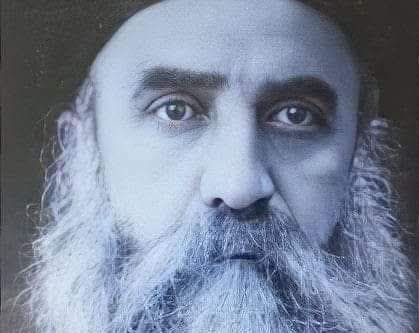
8. The Miracle Working Saint Nectarios of Pentapolis
Here are examples of miracles attributed to Saint Nectarios of Pentapolis, a modern Orthodox saint, whose intercession continues to bring healing and spiritual renewal. After St. Nectarios reposed in the Athens’ hospital Areteion, a nurse removed his sweater and placed it on the bed of a man who had been paralyzed for years. As soon as the sweater touched the bed, the paralytic immediately regained his strength, stood up and glorified God. This first miracle after his repose was seen as a divine confirmation of his sanctity.
The day after his repose, nurse Stasha Kalokagatho wiped myrrh from the saint’s forehead and anointed her sick husband. He was instantly cured and even attended the saint’s funeral on Aegina.
Panagiotis Daskalakis became paralyzed from the waist down. While being wheeled to surgery, a nurse told him to pray to St. Nectarios. He implored the saint to enlighten the doctors or heal him himself. St. Nectarios appeared to him in a vision, untied his leg and said, “I will heal you, and you will walk again.” A nurse then anointed him with oil from the saint’s vigil lamp; he immediately stood up, and doctors recorded his recovery as a miracle. He later walked barefoot to the monastery to give thanks.
Stavros Kalkandis, a Greek Air Force officer, was tetraplegic after spinal injuries. During a pilgrimage to Aegina, the reliquary containing St. Nectarios’ relics was placed on his lap. After praying fervently, he returned to the rehabilitation center. About ten days later he felt something “loosen,” stood up with assistance and gradually walked unaided. He later walked freely in the chapel, praising God, and devoted his life to serving others.
Christos Kaznesiotis developed a tumor on the left side of his brain. Before surgery, he visited St. Nectarios Convent in Aegina, venerated the relics and anointed himself with holy oil. When he applied the oil, he felt a spreading heat. Surgeons were surprised at how alert he was the next morning and discharged him early. Two weeks after surgery the incision had fully healed and he returned to work; subsequent examinations have been clear
A woman from Africa left her 16 year old son, who suffered from severe brain cancer, at home. While visiting St. Nectarios’ cell in Aegina, she saw an elder in green vestments (unknown to her) who told her: “Fear not, everything will be fine with your son.” When she returned home, her son was completely healthy.
The nuns at Holy Trinity Convent testify that miracles happen. They witness people suffering from cancer, paralysis and possession, receiving healing through the saint’s prayers; paralyzed pilgrims rise from wheelchairs and walk to his grave. The saint’s relics, exhumed in 1953, emitted a fragrant aroma, and thousands of miracles—especially the healing of cancer and serious illnesses—have been attributed to his intercession.
These stories are examples of how Christ continues to work through His saints. St. Nectarios’ miracles always lead people back to repentance and deeper faith. The saint’s humility and forgiveness encourage people to seek his intercession, not only for physical healing, but for the greater miracle of spiritual renewal.
9. Conclusion: Living the Miracle
The miracles recorded in the Gospels reveal Jesus Christ as the incarnate Son of God who loves mankind and wills our salvation. They range from changing water into wine and feeding multitudes to healing sicknesses, casting out demons, calming storms and raising the dead.
Each miracle points beyond itself to the ultimate miracle of the Cross and Resurrection, through which death is conquered and eternal life is offered to all.
Our response to Christ’s miracles should be twofold: faith and repentance. We believe that Jesus is the Christ, the Son of God, and we conform our lives to His teaching. We seek, not only external wonders, but the inner miracle of a transformed heart.
As St. John Chrysostom teaches, uprooting sin and acquiring virtue is a miracle greater than the expulsion of demons. Love, humility, forgiveness, and charity are the hallmarks of true discipleship.
When we participate in the Holy Sacraments, practice prayer and fasting, and cultivate love for God and neighbour, we partake of the miracles of God’s grace.
May the study of Christ’s miracles inspire us to trust in His power, receive His mercy, and cooperate with His grace. Then the miracles of the Gospels will not remain distant stories, but will become realities in our own lives, leading us to the salvation promised by our Lord.