

St. George Cathedral of Stockholm
Thursday, February 19, 2026
Topic: From Triodion to Holy Week and Easter:
A Journey of Repentance and Theosis
The liturgical journey of the Orthodox Church from the Triodion to Great Lent, through Holy Week, and culminating in the radiant and life-giving Feast of Pascha/Easter, constitutes the most profound spiritual movement within the life of the Church.
This sacred period is not simply a remembrance of past events, nor merely a cycle of beautiful liturgical traditions. It is, rather, an existential and ontological journey, a path of restoration that leads the human person from alienation to communion, from fragmentation to wholeness, from death to life.
In the theology of the Church Fathers, salvation is not understood primarily in juridical or moral terms, but in ontological and therapeutic ones. Humanity’s fundamental tragedy is not simply that it has broken rules, but that it has become separated from the Source of life.
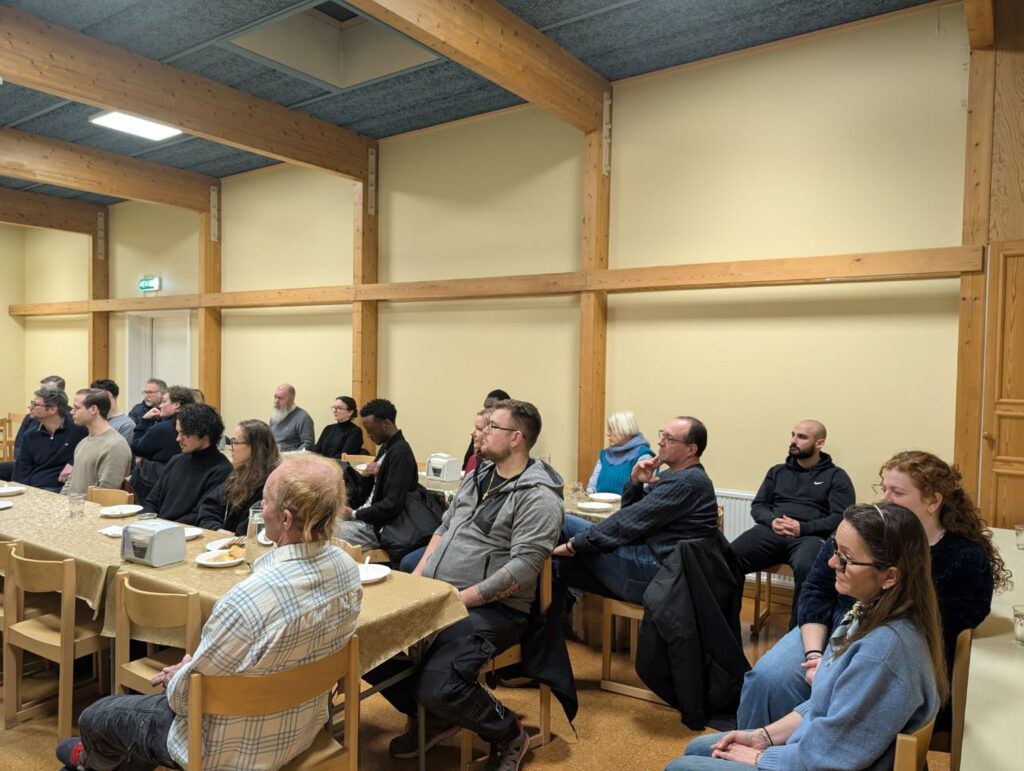
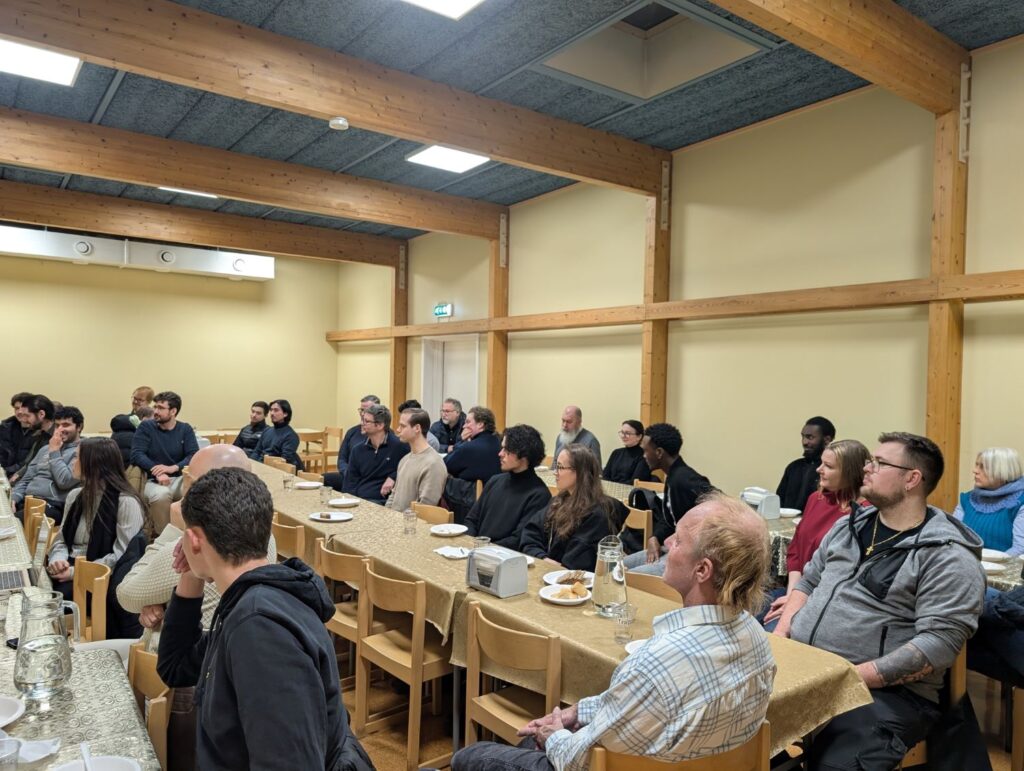
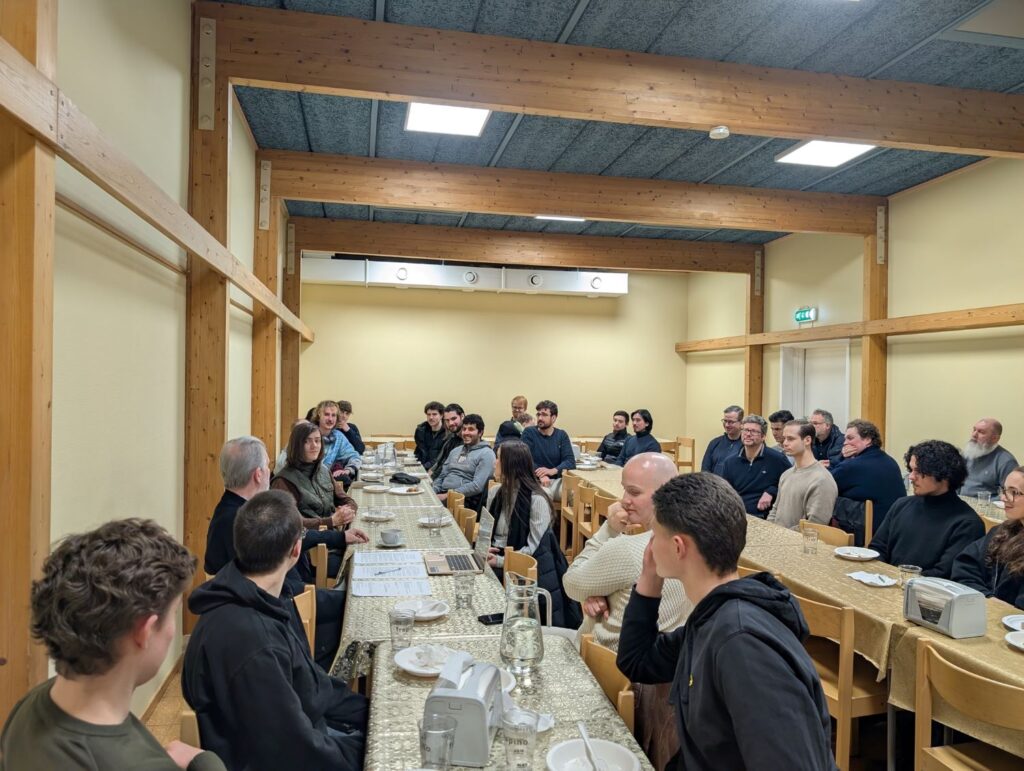
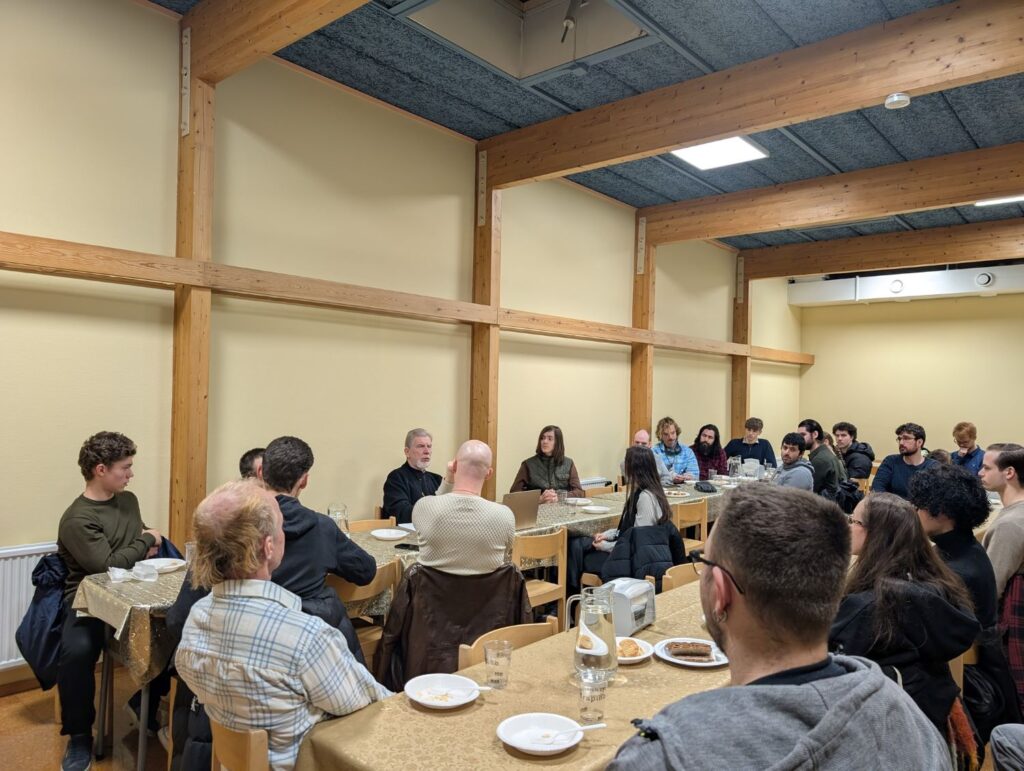
Saint Athanasios the Great expresses this truth with remarkable clarity when he writes, “The Word became man so that man might become god by grace.” In this brief yet inexhaustible statement, he reveals both the tragedy of the human condition and the glory of its restoration.
Humanity, created for communion with God, had fallen into corruption and death, but in Christ, human nature itself is restored, healed, and united once again with divine life.
This restoration is not imposed externally. It unfolds within the living experience of the Church, and above all, within her liturgical life. As Vladimir Lossky – a Russian Orthodox theologian exiled in Paris- reminds us, the Divine Liturgy is not a symbolic reenactment, but real participation in divine reality.
Through the liturgical journey of the Triodion and Great Lent, the faithful are not merely instructed; they are transformed.
The Church, with the wisdom of a loving mother and a skilled physician, begins this journey gently. The Triodion opens not with strict ascetic demands, but with a call to self-knowledge.
It begins with the Sunday of the Publican and the Pharisee, confronting us immediately with the fundamental spiritual condition that determines our relationship with God. The Pharisee represents the illusion of spiritual self-sufficiency, the tragic condition in which a person believes himself righteous and therefore no longer capable of repentance.
The Publican, by contrast, stands in the truth of his own brokenness. He does not justify himself. He does not compare himself with others. He simply says, “God, be merciful to me, a sinner.”
In these few words, the entire foundation of spiritual life is revealed. Saint Isaac the Syrian tells us that humility is the garment of divinity itself. It is not weakness, but truth. It is the recognition that life itself is a gift, and that apart from God, we cannot exist. Pride isolates the human person, enclosing him within himself. Humility restores openness, restoring the human person to communion with God.
This movement deepens on the Sunday of the Prodigal Son, where the Church reveals the true nature of repentance. Repentance is not merely regret or moral correction; it is a return to the Father. The Prodigal Son does not simply acknowledge his error. He remembers his father’s house, and in remembering, he begins to return.
Saint Gregory of Nyssa teaches that sin is exile from true being, and repentance is the return to authentic existence. What is most striking in this parable is not the son’s repentance, but the father’s response. The father runs toward him. He does not wait for perfection. He receives him immediately, restoring him fully.
Here we encounter one of the most profound truths of Orthodox theology: that divine love precedes human repentance. Fr. Dumitru Staniloae -a Romanian Orthodox Priest and theologian- explains that repentance is possible only because divine love already surrounds and sustains the human person. We return because we are already loved.
This revelation is followed by the Sunday of the Last Judgment, which reminds us that love is not merely an emotion, but the very criterion of existence. Christ tells us that we will be judged according to whether we have loved, whether we have recognized Him in the hungry, the stranger, the suffering.
Saint Maximus the Confessor explains that love is the natural state of the human soul, because humanity is created in the image of the God who is love. To refuse love is not merely to disobey a commandment, but to deny our own nature.
Forgiveness Sunday then brings us to the threshold of Great Lent by restoring communion. We ask forgiveness of one another, not as a formality, but as a necessity. For sin isolates, but forgiveness restores unity.
Saint Cyprian of Carthage reminds us that salvation is inseparable from life in the Church, because the Church is the place where communion is restored. Thus, Great Lent begins not with external discipline, but with restored relationship.
As we enter Great Lent itself, the Church intensifies the spiritual journey, guiding the faithful through purification, illumination, and union.
Saint Maximus the Confessor describes these as the stages through which the human person is restored. The ascetical practices of fasting, prayer, and repentance are not ends in themselves. They exist to free the human person from the tyranny of the passions, to restore the clarity of the mind, and to reopen the human heart to divine presence.
The services of Great Lent express this transformation with extraordinary depth. In the Great Compline, we encounter prayers of profound repentance and existential honesty.
The prayer of Saint Ephraim the Syrian diagnoses the deepest spiritual disorders of the human condition: sloth, despair, lust for power, and idle talk. These are not simply moral failures; they are manifestations of a deeper fragmentation within the human person. Through repentance, this fragmentation is healed.
The Divine Liturgy of the Presanctified Gifts sustains the faithful in this struggle by offering participation in the Eucharistic life of Christ.
Saint Nicholas Cabasilas teaches that in the Eucharist, Christ unites His life to ours, transforming our mortal existence into immortal life.
Metropolitan Kallistos Ware reminds us that the Eucharist is not merely symbolic nourishment, but the medicine of immortality.
The Sundays of Great Lent then guide us progressively toward restoration. On the Sunday of Orthodoxy, the Church celebrates the restoration of icons, affirming that in Christ, God has become visible.
Saint John of Damascus explains that because the Word became flesh, matter itself becomes capable of revealing divine glory. The restoration of icons reflects the restoration of human vision, the recovery of our ability to perceive God.
On the Sunday of Saint Gregory Palamas, we are reminded that God is not distant or inaccessible. Through His uncreated energies, He makes Himself truly present.
As Lossky explains, the distinction between essence and energies preserves both divine transcendence and divine intimacy. God remains beyond comprehension, yet truly communicable.
At the midpoint of Great Lent, the Cross is lifted before us. The Cross reveals that salvation comes not through domination, but through sacrificial love.
Saint Gregory the Theologian teaches that Christ conquers death not by avoiding it, but by entering it and destroying it from within.
Saint John Climacus then reminds us that spiritual life is an ascent, requiring perseverance and cooperation with grace.
Saint Mary of Egypt reveals that no depth of sin can prevent the possibility of transformation. Her life stands as living testimony to the limitless power of repentance.
Finally, Holy Week brings us face to face with the mystery of Christ’s Passion. In His suffering and death, Christ enters fully into the depths of human existence.
Saint Maximus the Confessor explains that Christ assumes every dimension of human nature in order to heal it completely.
And then, in the darkness of Easter night, everything changes. Christ rises from the dead. Death, which had defined human existence since the Fall, is destroyed.
Saint John Chrysostom proclaims triumphantly, “Christ is risen, and death is overthrown.” The Resurrection is not simply an event in the past. It is the restoration of human nature itself.
As the late Metropolitan John (Zizioulas) of Pergamon explains, the Resurrection restores true personhood, freeing humanity from the limitations of biological existence and restoring it to eternal communion with God.
This is the ultimate purpose of the journey we have undertaken. The Triodion, Great Lent, and Holy Week do not exist merely to prepare us to celebrate Pascha as an external feast. They exist to prepare us to become participants in the Resurrection itself.
Saint Symeon the New Theologian expresses this with remarkable boldness when he writes that the Resurrection of Christ occurs within each believer.
This is the true meaning of the Christian life. Not simply to believe in Christ, but to be united with Him. Not simply to commemorate His Resurrection, but to participate in it.
This is the invitation extended to us through the sacred journey of the Triodion, Great Lent, and Easter. An invitation to repentance, to healing, to life, and ultimately, an invitation to become, by grace, what Christ is by nature. In Him, humanity is restored and deified!