

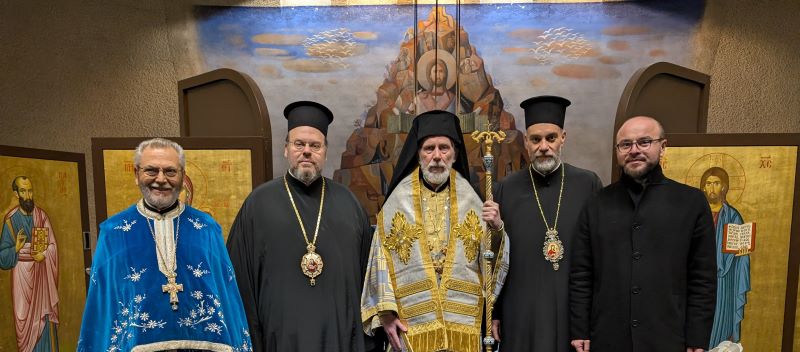
H.E. Metropolitan Cleopas of Sweden and All Scandinavia’s Presentation on “What Makes a Space Holy,” within the framework of the Dialogue between the Ecumenical Patriarchate of Constantinople (Office of Inter-religious and Inter-cultural Affairs) and the International Jewish Committee for Inter-religious Consultations.
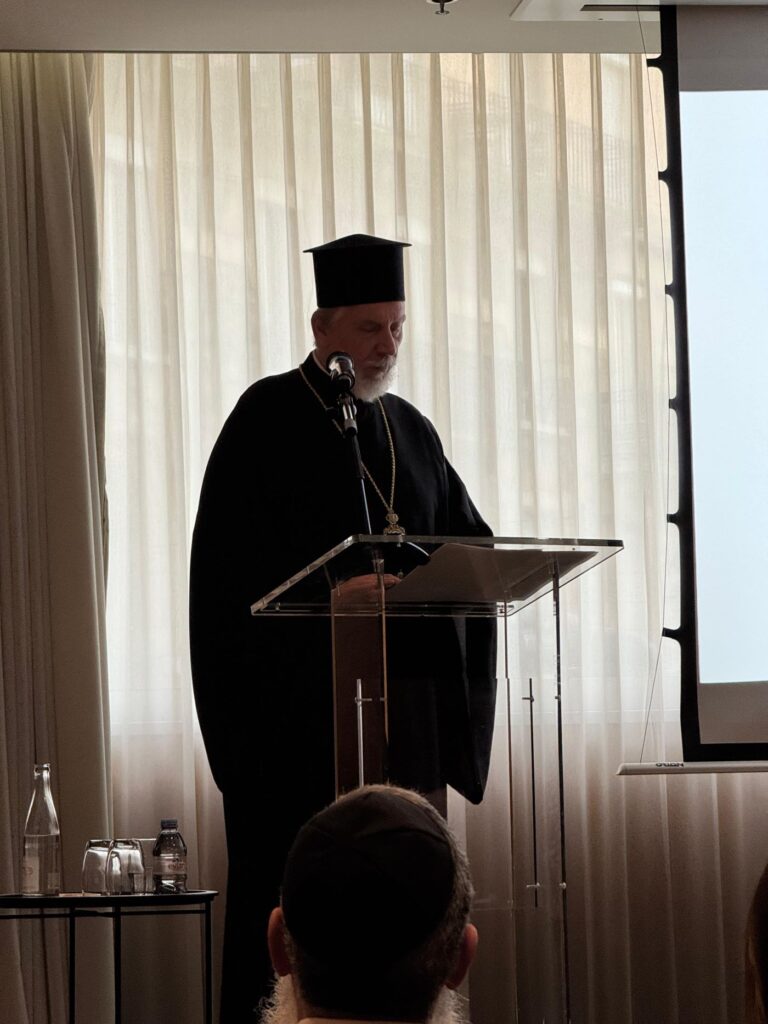
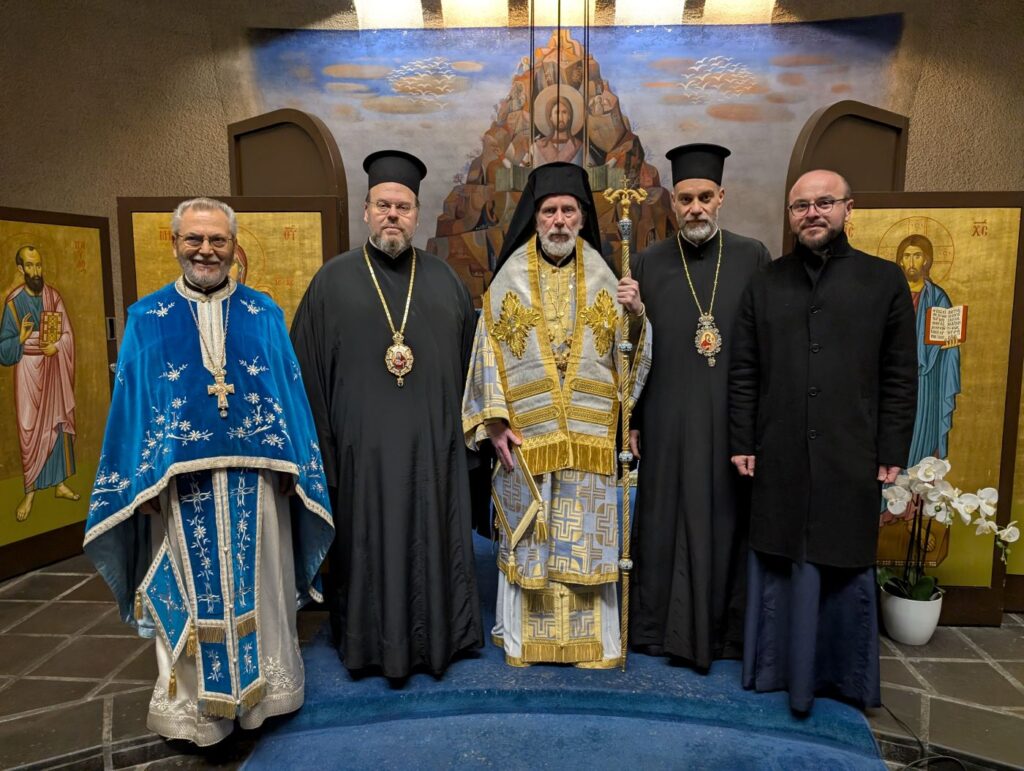
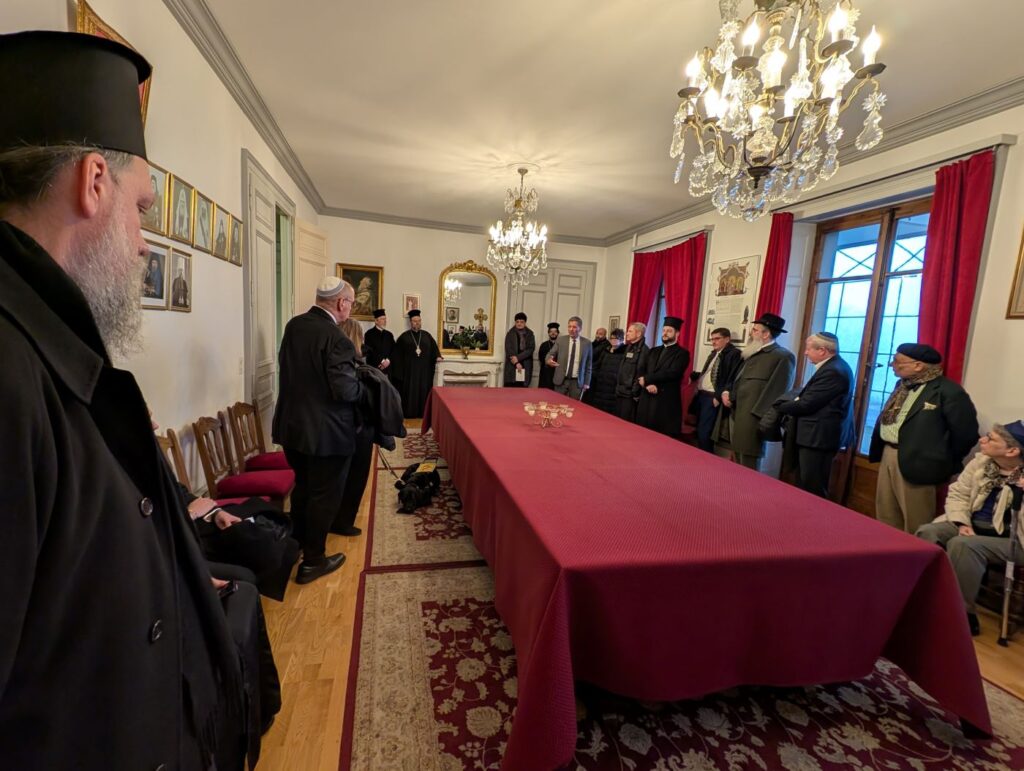
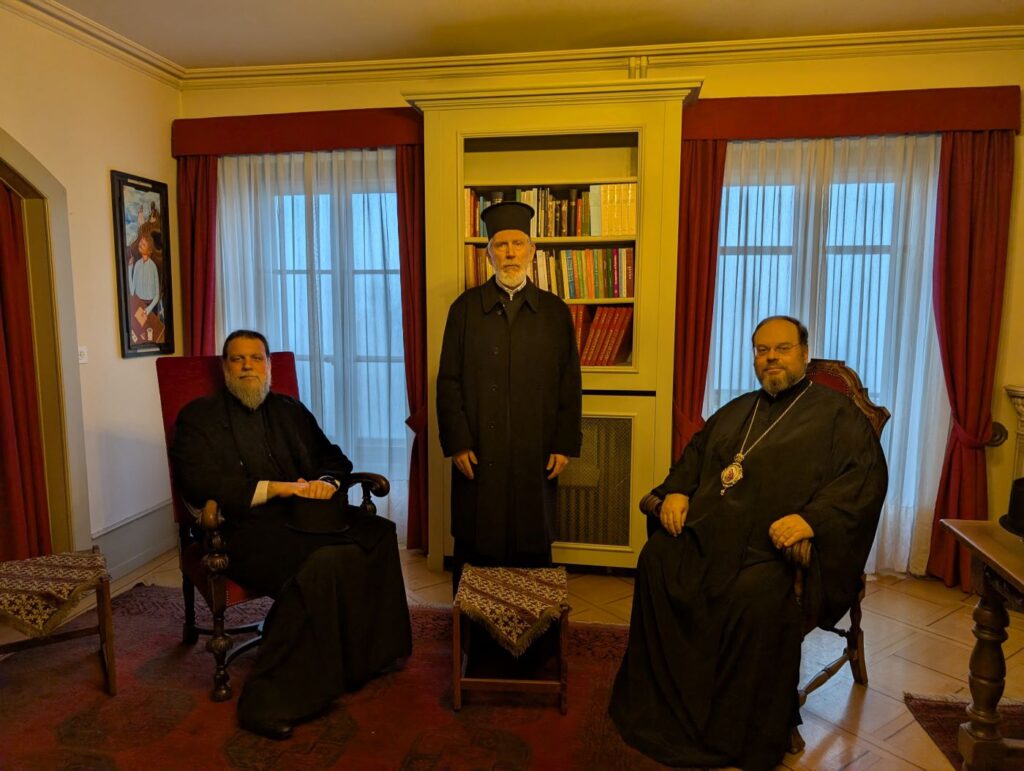
Geneva, December 8, 2025
Your All-Holiness Ecumenical Patriarch Bartholomew,
Distinguished Members of the International Jewish Committee for Interreligious Consultations,
Esteemed Representatives of the Ecumenical Patriarchate,
Honored Participants and Friends,
It is both a blessing and a responsibility to reflect together on the question that lies before us today: What makes a space holy? It is a question that touches the essence of who we are as communities of worship—Christian, Jewish, and indeed, all peoples who seek to orient their lives toward God.
Holiness is not simply a category of sacred geography—it is a mode of encountering God, of being formed, transformed, and restored into communion with one another and with the One who is Holy.
1. Holiness Begins in the Presence of God
In both our Jewish and Christian traditions, the sanctity of a space is never arbitrary. A space is not sacred because of ornamentation, architectural precision, or human consecration alone. Rather, holiness arises from the presence of God and the response of the human heart.
In the Book of Exodus, when Moses approaches the burning bush, the Lord says: “Remove the sandals from your feet, for the place on which you stand is holy ground” (Exodus 3:5).
The desert shrub, the dust beneath Moses’ feet—these are ordinary. What makes them holy is God’s self-revelation; God’s nearness and Moses’ recognition of this nearness.
Likewise, the Temple in Jerusalem, the focal point of Jewish worship for centuries, was holy not simply as an architectural structure, but as the dwelling place of the Divine Presence—the Shekhinah.
Even after the destruction of the Temple, the Jewish tradition preserved the concept that holiness is not lost but becomes diffused carried into the home, the synagogue, the study hall, and indeed, the human heart.
Orthodox Christianity recognizes the same fundamental truth: holiness originates in God. As St. Gregory of Nyssa writes, “Only God is holy in Himself; others are holy by participation.” The holiness of a church building, a monastery, a pilgrimage site, or a relic, is derivative; it is participation in the divine holiness.
2. Holiness and the Incarnation: God With Us
For the Orthodox Christians, the deepest understanding of holy space is shaped by the Incarnation. “And the Word became flesh and dwelt among us” (John 1:14). The Greek term ἐσκήνωσεν—“dwelt”—literally means “tabernacled.”
God pitched His tent among humanity, entering physical space, material existence, human experience. This teaches us that physical space is not a barrier to God but a vessel of His presence.
Thus, the Church Fathers insist that creation is capable of bearing the divine. St. John of Damascus defended the veneration of icons by proclaiming, “I do not worship matter, but I worship the Creator of matter who became matter for my sake.” Holy space is possible precisely because God entered space.
This is why the Orthodox Church prays, at every consecration of a church, not only that we might make the space holy, but that God might manifest His presence there, just as He revealed Himself to Moses, to Elijah on Mount Horeb, and above all, in the Word Who took on flesh.
3. Holy Space as a Meeting Place
In both of our traditions, holy space is not simply a place to think about God; it is a place to meet God. The synagogue and the church are dwelling places of God’s glory, where prayer, repentance, and the offering of the heart take place.
In Hebrew, the word for synagogue, Bait Knesset, means house of assembly; a place where the community gathers. Likewise, the Orthodox Church calls the worship space the temple, echoing the understanding that the church is not merely a building but the very house where heaven and earth meet.
St. Maximus the Confessor, in his mystical theology, speaks of the church building as a microcosm of creation: the nave representing the world, the Altar/the Cados Cadoshim) representing heaven, and the main church being the place of divine-human communion.
The church is a place where the faithful enter into a different mode of existence, where time is surpassed, where eternity touches us, where the human being stands in awe.
4. Holy Space Requires Human Response
Yet God’s presence alone does not constitute holiness. Holiness requires response. In rabbinical tradition, holiness is relational; God calls and the people answer through covenantal faithfulness.
In Christian tradition, holiness requires synergy; cooperation between divine grace and human freedom.
A church or synagogue may stand empty; its holiness is activated by prayer, reverence, tears, joy, silence, song, repentance, and blessing.
Prophet Isaiah tells us: “These people honor me with their lips, but their hearts are far from me” (Isaiah 29:13).
Sacred space can be profaned when the human heart is closed, even as it can be sanctified when the heart turns toward love.
St. John Chrysostom teaches us that “The church is not walls and roof, but the assembly of the faithful.” The people make the space what it is. In other words: A space becomes holy when God is welcomed there.
5. The Holy Space is Honored by Peace, Reverence, and Justice
Holiness cannot exist without peace. Holiness cannot be maintained through violence or exclusion.
Prophet Micah reminds us: “What does the Lord require of you but to do justice, to love mercy, and to walk humbly with your God?” (Micah 6:8).
A space cannot be holy if justice is denied therein.
The holiness of space demands:
- reverence — in how we speak and act within it,
- hospitality — in how we welcome strangers,
- peace — in how we treat one another.
St. Isaac the Syrian says, “Make peace with yourself, and heaven and earth will make peace with you.” Holiness radiates outward.
6. Holy Space in a Wounded World
We live in a time when holy spaces are often not respected:
- Churches, synagogues, and mosques are attacked.
- Cemeteries are desecrated.
- Prayer gatherings are targeted.
- Pilgrims fear to travel.
This is not only a political or a social crisis—it is a spiritual wound. It reflects the forgetting of reverence, the loss of mystery, turning a blind eye to the image of God in our fellow men and women.
Jerusalem—revered by Jews, Christians, and Muslims—is perhaps the clearest example: a city whose holiness is recognized by all, yet whose peace is fragile.
The Psalmist prays: “Pray for the peace of Jerusalem: May those who love you prosper” (Psalm 122:6).
The peace of holy space is not merely the absence of conflict; it is the presence of understanding, respect, memory, and love.
7. Holy Space is Ultimately the Human Person
Our traditions affirm that the most profound holy space is not built of stone; it is the human person. The human being is created in the image and likeness of God (Genesis 1:26). The human heart is the altar from which prayers rise. The human body is the temple of the Holy Spirit (1 Corinthians 6:19).
St. Macarius of Egypt writes: “The heart is but a small vessel, yet dragons and lions are there, and also God and the angels; the kingdom is there, and the kingdom of darkness is there.”
Holiness begins in the heart. If we lose the sense of the sacred in the human person, then no building, no place, no shrine can remain holy, but if we honor the divine image in one another, then we shall encounter hallowed ground wherever we stand, even in the barren desert.
8. A Shared Calling
What makes a space holy?
- The presence of God.
- The response of the human heart.
- The dedication of a community to prayer, peace, and justice.
- The recognition of the divine image in one another.
This understanding, shared across our traditions, gives us a foundation for dialogue and cooperation. We need not to agree on all theological doctrines, but to stand together in reverence for what is holy. We are called not to erase difference, but to deepen our encounters.
To stand on holy ground is to remove the sandals of pride, prejudice, supremacy, and fear. It is to recognize that we approach the One who is greater than our boundaries and yet nearer to us than our own breath.
9. Churches, Synagogues, Mosques, Temples—targets of violence
Yet, when we speak of holy space today, we must do so with sobriety and compassion, because our own era is marked by open wounds. Across the world, places of worship—churches, synagogues, mosques—have become targets of violence. In recent years, we have witnessed the shocking reality that the very spaces, meant to shelter prayer, have instead been pierced by the poisonous arrow of fear, bloodshed, and sorrow.
The figures are truly staggering. According to an April 2023 report by the International Society for Civil Liberties and Rule of Law, at least 52,250 persecuted Christians have been killed in the past fourteen years, simply for the crime of being Christian.
In its “Intolerance and Discrimination Against Christians in Europe Report 2024” OIDAC Europe identified 2,211 anti-Christian hate crimes in 2024. Likewise, in the United States, newly-released hate crimes data from the FBI, paints a disturbing picture of widespread anti-Jewish hate in America. Jews, who account for just 2% of the U.S. population, were the second-most targeted group, with 18% of all reported hate crimes being committed against the Jewish community in 2024. This amounts to a 5.8% increase from 2023.
Among all religiously-motivated hate crimes, the data showed that 69% targeted Jews. In the two years since the October 7th Hamas terror attacks – the deadliest day for Jews since the Holocaust – the tide of anti-Jewish hate has only risen, carrying devastating consequences in its wake. American Jews have experienced violence, harassment, intimidation, and antisemitic vandalism at unprecedented levels.
According to the Anti-Defamation League’s latest Global 100 survey, 20 percent of respondents worldwide have not heard about the Holocaust. Less than half (48 percent) recognize the Holocaust’s historical accuracy, which falls to 39 percent among 18- to 34-year-olds, highlighting a worrying demographic trend.
Respondents, younger than 35, also have elevated levels of antisemitic sentiments (50 percent), 13 percentage points higher than respondents over 50. This is particularly disturbing because as our common history has shown, denial is the final stage of genocide.
Acts of terrorism, motivated by ideology or hatred, have violated spaces dedicated to God. Racism, xenophobia, religious and political extremism continue to fuel anger and division. And we must call out, with clarity and moral responsibility, the ominous specter of antisemitism, which remains a grave sin, a spiritual blindness, and a denial of the dignity of the human person created in the image of God.
The Orthodox Church has repeatedly and clearly condemned antisemitism, not only as hatred against a people, but as hatred against the divine gift of the covenant, against memory, and against the God of Abraham, Isaac, and Jacob, Whom we ourselves also worship.
The vulnerability of holy spaces in our age reminds us that holiness does not remove a place from history; rather, holiness places that space in the midst of history, where hope is contested, where peace must be defended, where the dignity of the human being must be affirmed again and again.
As Orthodox Christians, we believe that the sanctity of a space cannot be destroyed by violence, because holiness proceeds from God. But human reverence can be wounded. Communal trust can be shaken. Fear can enter the heart. And this is why our response must not be withdrawal or isolation, but deeper commitment—to dialogue, to education, to hospitality, and to the healing of our common memory.
St. Porphyrios of Kavsokalyvia taught that true spiritual life does not hide from the world, but transforms it. He said, “Where there is love, there is no fear.”
To protect holy spaces, we must cultivate a love, strong enough to disarm hatred, not only politically or socially, but also spiritually. In a November 19th, 2025 article in the New York Times entitled “Orthodox Church Pews are Overflowing with Converts,” there is extensive mention about the influx of Generation Z converts espousing the faith, which is in part attributed to Orthodox Christianity’s historic continuity dating back to the apostolic era and its transformative spirituality.
These elements are closely linked with its congregations’ perception of the sanctity of space, which is likely why in the aftermath of the coronavirus pandemic, by 2023, in-person attendance at worship services had bounced back completely at the average Orthodox parish, outperforming many other larger denominations, according to research by “The Exploring the Pandemic Impact on Congregations study.”
In this task, we share common cause. Jews and Christians alike have known what it means to guard prayer in the midst of danger, to memorize Scripture when books were forbidden, to carry the sanctuary in the heart when the sanctuary of stone was destroyed. Our histories teach us resilience as hope.
Thus, the sanctity of space in our age is upheld not only by liturgy and architecture, but by commitment to peace, to mutual recognition, to the renouncing of hatred, to the rejection of every ideology that would deny our fellow men and women of their humanity.
Holy space must be defended, not with weapons, but with compassion, education, vigilance, and the shared witness that every human being bears the imprint of the Divine.
10. Conclusion
Your All-Holiness,
Dearly Beloved Brothers and Sisters,
To speak of holy space is to speak of the mystery of God’s nearness. The task that lies before us in this dialogue is not merely academic; it is pastoral, spiritual, and profoundly human. It is to safeguard the spaces where God is encountered, and to cultivate the hearts where God desires to dwell.
May our dialogue be a form of worship.
May our friendship be a sanctuary.
May our shared reverence become a witness to the world.
And may the peace of the Holy One—who called Moses from the burning bush, who became flesh and dwells among us—grant us the wisdom to recognize holy space in one another. Thank you.