The True Role of Catechumens & the Newly Illumined in the Orthodox Church
By His Eminence Metropolitan Cleopas of Sweden
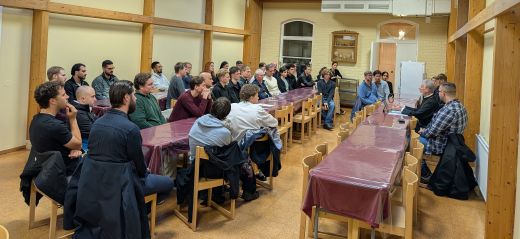
Gathering of Catechumens and Newly Illumined
St. George Cathedral of Stockholm
Thursday, September 10, 2026

Dear catechumens and newly illumined brothers and sisters in Christ,
Welcome to our first gathering after the summer period. I am very pleased that we begin this new season not only by asking what the Orthodox Church teaches, but also by asking a more personal and demanding question: What does it mean for me to enter the life of the Church? What does it mean not simply to admire Orthodoxy, study Orthodoxy, or attend an Orthodox service, but truly to belong to the Church and to take an active place within her life?
This question concerns each of you. For the catechumen, it concerns the kind of life for which you are preparing. Catechesis is not merely a course that provides religious information before Baptism or Chrismation. It is preparation for a new way of living.
For the newly illumined, the question is equally important, because Baptism and Chrismation are not a graduation ceremony after which one has completed the journey. They are the beginning of the journey.
To be newly illumined means that the light of Christ has been given to you so that it may shape your prayer, your relationships, your choices, your use of time, and your place within the Christian community.
I would like to speak very directly today. The Church does not need spectators. She does not need people who simply enter on Sunday, light a candle, remain for the Divine Liturgy, drink a cup of coffee, and then disappear until the following Sunday.
Sunday worship is indispensable. The Divine Liturgy is the heart of our common life. Yet the heart does not exist by itself; it sends life into the whole body. In the same way, what we receive in worship must flow into service, fellowship, mercy, learning, hospitality, and witness during the entire week.
Therefore, the central message of this address is simple: the Sunday Liturgy is the center of Orthodox Christian life, but it is not the whole of Orthodox Christian life. The Church asks for your presence, your prayers, your gifts, your time, your concern for others, and sometimes your very practical labor.
The Church needs someone to visit a lonely person, someone to welcome a newcomer, someone to teach a child, someone to prepare coffee, someone to organize an event, someone to sing, someone to translate, someone to carry a box, and, yes, someone to take the vacuum cleaner and clean the church. These are not unimportant tasks. When they are offered with humility and love, they become acts of service to Christ Himself.
A Time of New Interest — and a Need for Deep Roots
In recent years, many Orthodox parishes have seen a renewed interest in the faith, including interest among younger adults. Recent studies and public reports, especially from the United States, have described a noticeable presence of converts and younger people in Orthodox communities. We should receive such interest with gratitude, but not with triumphalism.
Numbers alone do not create disciples. Curiosity alone does not create a Christian life. An online video, a podcast, a beautiful icon, or the solemnity of the Divine Liturgy may open a door, but a person must still walk through that door and learn to live within a real parish among real people.
This is especially important in our time because it is possible to consume a great deal of Orthodox content without ever learning the ordinary virtues of parish life. One may know many theological terms and still not know the name of the elderly person who stands nearby every Sunday.
One may argue online about canons and traditions, yet never ask whether the parish hall needs to be prepared or whether a grieving family needs a meal. One may have strong opinions about how Orthodoxy should be lived, while never accepting a simple task from the priest or parish council.
The Church is not an idea on a screen. She is the Body of Christ gathered in a particular place. She includes people of different ages, languages, temperaments, cultures, and levels of education.
She includes people who are joyful and people who are burdened; people who are spiritually mature and people who are struggling; people whom we naturally like and people whom we must learn to love. This concrete life together is not an obstacle to spiritual growth. It is one of the main places where spiritual growth happens.
The great question, therefore, is not merely, ‘Why am I interested in Orthodoxy?’ It is, ‘Am I willing to become faithful within the Church?’ Interest can be temporary. Faithfulness is proven over time.
It is proven when we come to worship even when we do not feel inspired, when we keep our word, when we serve without receiving praise, and when we remain patient with the weaknesses of others. The goal is not simply to attract people to the Church. The goal is to help each person put down roots in Christ and in the life of the parish.
What It Means to Be a Catechumen
The word catechumen refers to a person who is being instructed, formed, and prepared to enter the full sacramental life of the Church. In the ancient Church, catechesis involved teaching, prayer, moral conversion, participation in the worship that was appropriate to the catechumen, and the gradual learning of a Christian way of life.
Saint Cyril of Jerusalem addressed catechumens not as detached students, but as people approaching a holy sacrament and preparing to be clothed with Christ.
Therefore, a catechumen is not merely an applicant completing a religious requirement. A catechumen is a person learning repentance, prayer, trust, obedience, and belonging. You are learning the Creed, the Scriptures, the sacraments, the commandments, and the history of the Church.
At the same time, you are learning how to stand with a community, how to receive guidance, how to ask questions honestly, and how to make room for the needs of others.
There are sacramental boundaries that must be respected. Until a person is received into the Church according to the pastoral direction of the priest or bishop, he or she does not receive Holy Communion and does not assume roles that require sacramental membership or a specific ecclesiastical blessing.
Respecting these boundaries is not a sign of exclusion. It is part of truthful preparation. The Church does not rush what is holy; she prepares us to receive it responsibly.
At the same time, catechumens can already begin to learn the rhythm of parish life. You can attend the services faithfully. You can remain for fellowship. You can help with practical tasks, participate in charitable efforts, assist at parish events, ask how you may support those in need, and begin to know the members of the community.
All of this should happen with humility, discernment, and the blessing of the responsible clergymen. The purpose is not to prove your worth. The Church is not asking you to earn Baptism. The purpose is to begin practicing the life into which you are asking to be received.
What It Means to Be Newly Illumined
The newly baptized and chrismated are traditionally called the newly illumined because Christ has brought them into His light. This language is beautiful, but it is also demanding. Light is given so that we may walk in it.
Baptism unites us to the death and Resurrection of Christ. Chrismation seals us with the gift of the Holy Spirit. Holy Communion nourishes us with the life of Christ. These sacraments are not decorations added to an otherwise unchanged life. They are the foundation of a new existence.
A newly illumined Christian must resist the temptation to think, ‘Now I have reached my goal.’ Reception into the Church is not the end of catechesis. It is the beginning of lifelong formation. The newly illumined still need instruction, confession, prayer, the study of Scripture, spiritual guidance, and regular participation in the sacramental life.
Questions do not end at Baptism; often deeper questions begin after Baptism, when the beauty of the faith must be lived in the ordinary pressures of work, family, fatigue, disappointment, and temptation.
The newly illumined also need the parish, and the parish needs them. You bring gifts, experiences, languages, professional abilities, and a freshness of gratitude that can strengthen the whole community. Yet these gifts must mature through patience.
New enthusiasm is a blessing when it is joined to humility. It becomes dangerous when it assumes that a few months of reading provide the wisdom to correct everyone else. The truly illumined person is not the loudest person in the room, but the person who increasingly reflects the gentleness, truth, and mercy of Christ.
So, I say to our newly illumined. Do not disappear after your reception into the Church. Do not treat the day of your Baptism or Chrismation as the conclusion of your relationship with the parish.
Stay close. Continue to learn. Ask for a place to serve. Let the community know you and make the effort to know the community. The sacramental gift you have received calls you into a life of communion and responsibility.
The Church Is a Body, Not an Audience
Saint Paul tells the Corinthians, ‘You are the body of Christ and individually members of it.’ This image gives us one of the clearest answers to the question of participation. In a body, every member receives life from the whole and contributes to the good of the whole. The eye does not live for itself. The hand does not work only when it finds the task interesting. The members are different, but they belong to one another.
A parish, therefore, is not a religious theater in which the priest, chanters, choir, and a few volunteers perform while everyone else watches. The clergy have a particular sacramental and pastoral ministry, but the life of the parish is not the private responsibility of the clergy. The parish is the common spiritual home of the faithful.
If we say, ‘The church should organize this,’ ‘They should clean that,’ or ‘They should help those people,’ we should stop and ask who we mean by ‘they.’ In the Church, ‘they’ must gradually become ‘we.’
This change from ‘they’ to ‘we’ is one of the clearest signs of belonging. A visitor asks what the parish can provide. A member also asks what he or she can offer. A disciple asks whether the activity serves Christ and the neighbor. A spectator notices what is missing. A servant notices what is missing and quietly asks how to help.
This does not mean that everyone must do everything. The body has different members and different functions. Some people have more time, some less. Some are healthy, others have limitations. Some can teach, others can cook. Some can sing, others can organize. Some can give financial support; others can give many hours of labor.
The goal is not uniformity or exhaustion. The goal is that each person should offer something real, according to his or her ability, with consistency and love.
The Divine Liturgy: The Center, Not the Limit
We must be very clear. Active participation in parish life can never replace worship. Service is not a substitute for prayer, repentance, Confession, or Holy Communion. The Divine Liturgy is the center because Christ gathers us, speaks to us in the Gospel, receives our offering, and gives Himself to His people. We do not create the Church through our activities. Christ creates and sustains His Church. We receive her life as a gift.
At the same time, the Liturgy sends us into the world. At its conclusion, we are dismissed in peace. This dismissal is not simply an announcement that the service is over. It is a sending. We have heard the Word, prayed for the whole world, offered thanksgiving, and encountered Christ. Now we must carry that peace into our homes, workplaces, friendships, and parish responsibilities.
The Eucharistic life teaches us the pattern of all Christian service; we receive, we give thanks, we offer, and we share. If I receive the Body of Christ while remaining indifferent to the suffering members of His Body, there is a contradiction in my life.
If I sing, ‘Let us love one another,’ but refuse to speak to the person beside me, the words have not yet reached my heart. If I pray for those who are sick, traveling, grieving, or in captivity, yet never take one concrete step to help someone, my prayer has not yet produced its full fruit.
For catechumens, faithful attendance at the Divine Liturgy teaches the language and rhythm of the Church even before full sacramental participation. For the newly illumined, receiving the Holy Sacraments should deepen the desire to serve.
In both cases, Sunday is not a box to be checked. It is the source of the whole week. The question after every Liturgy should be: ‘How will the grace and peace I have encountered become visible in the way I live and serve?’
The First Criterion: Faithfulness in Worship and Prayer
Before speaking about committees and practical work, we must begin with the first criterion of genuine participation; faithfulness in worship and prayer. The Church needs volunteers, but she first needs Christians. Activity without prayer easily becomes ego, competition, frustration, or burnout. Prayer without any willingness to serve can become self-centered. The two must remain together.
A serious Orthodox life includes the Sunday Divine Liturgy, the feast days, when possible, personal prayer, regular reading of the Gospel, fasting according to one’s strength and pastoral guidance, Confession, and the cultivation of repentance.
Catechumens should develop these habits gradually under guidance. The newly illumined should guard them carefully, because the first period after reception can be filled with joy but also with new temptations and distractions.
Reliability is also spiritual. If you promise to help, arrive on time. If you cannot come, inform the responsible person. If you accept a task, complete it. If you need training, ask for it. These ordinary habits reveal whether our faith has entered our character.
A parish cannot plan charitable work, education, events, or hospitality if people volunteer enthusiastically and then disappear without explanation.
We should therefore examine ourselves honestly. Am I becoming a person on whom others can depend? Do I pray before I serve? Can I accept correction? Can I perform a task that nobody notices? Can I serve alongside people whose style is different from mine? These questions reveal much more about spiritual maturity than impressive religious language.
Charity and Works of Mercy
One of the most important areas of parish participation is philanthropy; literally, love for the human person. Christ identifies Himself with the hungry, the stranger, the sick, the poor, and the imprisoned. The Church cannot proclaim the love of God while remaining indifferent to human need. Charity is not an optional public-relations activity. It belongs to the Gospel.
There are many ways to participate. A parish may collect food, clothing, hygiene products, school supplies, or financial assistance. It may support refugees, families facing unemployment, elderly people living alone, or persons recovering from illness.
It may cooperate with trustworthy local organizations. Some members can donate resources. Others can sort supplies, prepare parcels, drive, translate, make telephone calls, or help with the necessary administration.
Charity must also be personal. Sometimes the greatest need is not money but presence. A grieving person may need someone to sit quietly and listen. A new immigrant may need help understanding a letter or finding the correct office.
A parent under pressure may need a meal. An elderly member may need transport to church. A person in the hospital may need a visit arranged through the priest. A family after a funeral may need practical assistance long after the first expressions of sympathy have ended.
This service must be carried out with discretion. We do not turn another person’s suffering into a story about ourselves. We protect confidentiality. We do not promise help that we cannot provide, and we do not attempt pastoral or professional counseling for which we are not qualified.
We inform the clergy when a situation requires pastoral attention. We work as a community rather than as independent rescuers. True mercy is humble, reliable, respectful, and free from the desire to control the person we are helping.
I ask each of you to consider. Is there one work of mercy in which I can participate regularly? Not only once at Christmas, but with some continuity. The Church needs people who will help identify needs, organize a response, and remain present when the first wave of emotion has passed.
The Care and Cleanliness of the Church
Let us now speak about a very practical matter, the cleaning and care of the church building. Some people may think that this is secondary or beneath them. In reality, caring for the house of God is a concrete expression of reverence and gratitude. We enter a church that others have built, maintained, repaired, heated, decorated, and cleaned.
We benefit from the hidden labor of people whose names we may never know. We should not assume that this work will somehow be done by ‘someone else.’
The church needs people to vacuum the floors, dust, clean the entrance, care for the parish hall, wash cups, take out rubbish, check supplies, prepare candles, set rooms in order, decorate an icon with flowers, and help before and after major feasts.
Some tasks belong only to clergy, especially within the holy altar, and those boundaries must always be respected. But there is a great deal of work that can be shared by willing hands under proper direction.
Taking the vacuum cleaner and cleaning the church is not less spiritual than attending a lecture. If it is done with prayer, it becomes an offering.
Preparing the parish hall before others arrive can be an act of hospitality. Washing the final cups after everyone has gone home can be an act of love. The value of such service is not measured by public recognition. Christ sees what is offered in secret.
Practical service also teaches us to overcome entitlement. We stop treating the parish as a facility that exists for our convenience. We begin to recognize it as our common home. When we see a need, we do not immediately complain. We ask whether we can help.
When we use a room, we leave it ready for the next group. When an event ends, we do not assume that the clergy, the same volunteers, or the elderly members will clean everything.
A healthy parish should not depend permanently on a very small number of exhausted people. New members and younger members can bring new energy. Even one hour every few weeks can make a real difference when it is dependable. The question is not whether cleaning is glamorous. The question is whether we love the Church enough to care for the place where the community gathers to worship.
Sunday Coffee and the Ministry of Hospitality
The Sunday coffee hour may appear to be merely social, but it can become a genuine expression of hospitality. After the Divine Liturgy, people have an opportunity to meet one another, welcome visitors, ask how someone is doing, and begin friendships.
A newcomer who enters an unfamiliar Orthodox church may feel uncertain. He may not understand the languages being used, where to stand, or whom to approach. A warm welcome after the service can determine whether that person feels seen or remains anonymous.
Hospitality requires practical work. Someone must bring food, prepare coffee and tea, arrange the tables, make sure that children and elderly people are considered, serve, wash dishes, and clean the hall.
These duties should not always fall upon the same families. Catechumens and newly illumined can participate by joining a team, bringing something simple, helping with setup, or staying to clean afterward.
But the deeper ministry is not only the preparation of food. It is the creation of communion. At coffee hour, do not speak only with your existing friends. Look for the person standing alone. Learn names. Introduce people to one another.
If someone has missed several Sundays, ask whether he or she is well, without becoming intrusive. If a person speaks another language, help that person enter the conversation. If a family is new, explain parish activities and introduce them to the responsible people.
Hospitality also requires maturity. Coffee hour should not become a place of gossip, criticism, political conflict, or the formation of closed groups. It should extend the peace of the Divine Liturgy. It is the liturgy after the Divine Liturgy! We should ask ourselves whether our conversations build up the Body of Christ.
A cup of coffee offered with attention can open the door to friendship, pastoral care, and long-term belonging. This is why Sunday hospitality is not a minor activity. It is one of the places where a crowd becomes a community.
Standing Beside Those Who Are Struggling
Every parish includes people who are carrying burdens that may not be visible. There are those facing illness, bereavement, depression, loneliness, family conflict, financial pressure, or uncertainty about the future.
Saint Paul tells us to bear one another’s burdens. This does not mean that we invade people’s private lives. It means that Christian love makes us attentive and available.
Sometimes support begins with a simple message: ‘I noticed you were absent. I hope you are well.’ It may mean preparing food, offering transport, helping with a practical errand, visiting with permission, or informing the priest that someone may need pastoral care.
It may mean sitting with a person who has received bad news and resisting the temptation to offer easy explanations. Often the most compassionate words are, ‘I am sorry. I am here. May I help in some practical way?’
We must know our limits. Serious mental-health concerns require qualified professional care. Medical questions belong to medical professionals. Situations involving violence, abuse, or danger require immediate and appropriate action.
Parish friendship does not replace professional expertise. Yet professional care also does not remove the need for human companionship and prayer. The parish can help ensure that a suffering person is not abandoned.
A community becomes credible when people know that they will not be forgotten in times of trial. It is easy to celebrate together. Christian communion is revealed more deeply when we remain together in sorrow.
Catechumens can learn this spirit before reception into the Church. Newly illumined can make it part of their new life. Each of us can become the person who notices, listens, informs the right people, and offers a small but faithful act of support.
Catechetical Work, Sunday School, and the Formation of Children
The Church also needs people who will support the work of formation. The faith must be handed on to children, young people, catechumens, new members, and those who wish to deepen their understanding. This work is not limited to the clergy, although teaching in the name of the Church always requires appropriate preparation and blessing.
Some members may be called to help with Sunday school or youth activities. They may prepare materials, organize a room, supervise an activity, assist a trained teacher, arrange refreshments, communicate with parents, or support a service project.
Those with teaching ability and sound formation may, with the blessing of the clergy, take on greater responsibility. Because work with children and vulnerable persons requires safeguarding, all parish policies, legal requirements, and appropriate checks must be followed carefully.
Catechumens and newly illumined may also help the catechetical ministry through welcome and testimony. A catechumen who has been attending for some time can greet a person arriving for the first session and help that person feel less anxious.
A newly illumined Christian can explain, with humility, what helped him or her during the journey, without presenting personal experience as universal teaching. Practical help with online connections, printed materials, translations, room preparation, or follow-up emails can strengthen the whole program.
The most important qualification for catechetical service is not merely enthusiasm. It is faithfulness to the teaching of the Church, willingness to be corrected, and respect for pastoral authority.
We must never use a teaching role to promote personal theories or internet controversies. We should communicate the faith with clarity, warmth, and patience. A person who asks a basic question should never be made to feel foolish.
The formation of the next generation concerns everyone. Even those who do not teach can support families, learn the names of children, encourage young people, attend their presentations, and help create a parish in which they feel that they belong.
If children see only tired adults complaining about the Church, they will receive one message. If they see adults praying, serving, welcoming, and rejoicing together, they will receive another.
The Chant Stand, Choir, and Liturgical Service
Another area of participation is the liturgical ministry of the chant stand, choir, readers, altar servers, ushers, and those who prepare the church for worship. These ministries are visible, and for that reason they require particular humility. They are not opportunities for performance or personal importance. Their purpose is to serve the prayer of the Church.
A person who has musical ability may be able to join a choir or begin learning the chant tradition. A person with a clear voice and appropriate formation may be trained as a reader. Others can help welcome people at the entrance, distribute service books, explain where translations may be found, or assist with orderly movement during crowded services. Every role must be undertaken with the blessing and direction of the clergy.
Training matters. Good intentions are not enough when a task affects the worship of the whole community. A chanter must learn the services and respect the liturgical order. A reader must prepare the text and pronounce it clearly. An usher must combine attentiveness with gentleness. An altar server must understand both practical responsibilities and the reverence required in the Holy Altar. Catechumens may observe and learn.
We should also remember that the most important liturgical participation belongs to the whole congregation; attentive prayer, the responses, the Creed, the Lord’s Prayer, the hymns the people are invited to sing, and a reverent presence.
One does not need a visible position in order to participate deeply. The goal is not to stand where others can see us. The goal is to help the whole Church offer worship to God in peace and order.
Events, Administration, Communication, and Hidden Skills
Parish life includes many activities beyond the weekly services; lectures, feast-day meals, cultural events, youth gatherings, pilgrimages, charitable campaigns, concerts, conferences, retreats, and visits.
Each event requires planning. There are invitations to prepare, chairs to arrange, equipment to test, food to coordinate, guests to welcome, photographs to take appropriately, and rooms to restore afterward.
Many of you possess professional skills that can serve the Church. Some understand accounting, administration, information technology, graphic design, photography, sound systems, building maintenance, law, education, healthcare, translation, or event planning.
Others are especially good at making telephone calls, remembering details, organizing a schedule, or bringing calm to a busy room. These gifts may remain invisible unless you offer them.
The parish may also need help with websites, newsletters, social media, livestreaming, archives, membership records, or communication in several languages. Such work requires accuracy and respect for privacy.
Not every photograph should be published, not every story should be shared, and not every internal matter belongs online. People serving in communications must act under parish direction and remember with exceptional discretion that they represent the Church.
Administration may seem less spiritual than prayer, but careful administration protects people and enables ministry. A correct list helps someone receive information.
A well-prepared budget allows charitable work to continue. A clearly announced schedule helps people attend services. A properly maintained building keeps children, elderly people, and visitors safe. When offered honestly, these abilities become part of Christian stewardship.
Do not wait for the parish to guess your gifts. Speak to the priest or the responsible ministry leader. Say clearly what you can do, how much time you can realistically offer, and whether you need training. It is better to offer two dependable hours each month than to promise ten hours and provide none. The Church needs not only talent, but trustworthy talent.
Stewardship: Time, Abilities, and Material Support
Orthodox stewardship means recognizing that everything we possess is a gift from God and should be used with gratitude. This includes our time, abilities, attention, property, and financial resources.
Stewardship is not simply the payment of membership fees or the support of a building. It is a way of answering the question: ‘How do I return to God a portion of what He has entrusted to me?’
Financial support is necessary. Churches must meet the ordinary costs of worship, heating, maintenance, education, charity, clergy support, and administration.
A mature Christian does not assume that these costs will be carried by other people. The amount will differ according to each person’s circumstances, and generosity must never become a source of shame or comparison. What matters is a regular, free, responsible offering shaped by gratitude.
Stewardship also includes time. Time is often our most protected possession. We may say that we love the Church while giving every available hour to entertainment, hobbies, travel, or personal projects.
Rest and recreation have a rightful place, but discipleship requires a real place in the calendar. If parish service is always what we do only when nothing else is happening, it will rarely happen.
Stewardship also means allowing the Church to make use of our abilities. Perhaps you can repair something, teach a language, help with a computer, sing, cook, drive, or care for children. Perhaps your greatest gift is patience with elderly people or the ability to listen without judgment.
No gift is insignificant when offered to God. The widow’s small offering in the Gospel teaches us that God sees not only the amount, but the heart and sacrifice behind the gift.
A good practical question is this: What regular portion of my time, ability, and resources will I offer to the life of the Church? Do not answer only with emotion. Put the answer into a pattern that can be sustained. Christian stewardship becomes real when gratitude receives a schedule, a task, and a commitment.
Serving with Blessing, Humility, and Healthy Limits
Because service is important, we must also speak about how to serve well. Not every good idea should be started independently. The Church has order, responsibility, and pastoral oversight. Before beginning a ministry, fundraising campaign, teaching activity, public statement, or organized visit in the name of the parish, seek the blessing of the clergy and coordinate with the appropriate people. This is not bureaucracy for its own sake. It protects unity, safety, accountability, and trust.
Humility means that we can accept the task that is actually needed, not only the task we find impressive. A person may wish to teach while the immediate need is to wash dishes. Another may wish to lead while the community first needs him to learn how to cooperate.
Christ Himself came not to be served but to serve. There is no shame in beginning with simple work. In fact, simple work often reveals whether our desire is truly to help or to be recognized.
Healthy service also respects limits. The Church does not ask one person to neglect family responsibilities, employment, health, or necessary rest. Nor should a parish depend on a culture in which a few people are unable to say no.
Responsible ministry shares tasks, trains new people, communicates clearly, and allows time for prayer and renewal. Burnout does not glorify God.
We should beware of spiritual pride. New members sometimes feel an understandable excitement and want to correct customs, reorganize ministries, or measure the faithfulness of others. Remember that a parish has a history you may not yet know.
Ask before judging. Listen before proposing. Learn why something is done in a particular way. Offer your gifts, but do not demand control. The goal is not to build a parish in our own image. It is to become living members of the Body of Christ.
Finally, never confuse service with the right to influence every decision. We serve because we love Christ, not because service purchases authority. We may offer ideas respectfully, but we remain ready to accept a different decision. The deepest Christian service is free; free from resentment, free from manipulation, and free from the need for applause.
From Online Interest to Local Faithfulness
Many people first encounter Orthodoxy through the internet. Online resources can provide access to Scripture, sermons, theological lectures, liturgical music, and the lives of the saints. We should be grateful for what is good.
Yet the internet can also reward controversy, exaggeration, anger, and false certainty. It can create the impression that Orthodox identity consists mainly in taking positions against other people.
The parish corrects this distortion by placing us in relationships. The person beside us has a name, a history, and a burden. The priest is not merely a voice in a video; he is a pastor responsible for actual souls.
The Divine Liturgy is not content to be consumed; it is the common worship of a people. Service is not a public performance; it is often quiet labor that nobody photographs.
A useful test is this. Is my contact with Orthodox material making me more prayerful, more patient, more teachable, more faithful to the services, and more willing to help? Or is it making me more suspicious, argumentative, and certain that everyone else is wrong? Truth and love cannot be separated. Zeal that destroys communion is not healthy zeal.
Catechumens should bring theological questions to the catechetical setting and to the clergy rather than constructing a personal Orthodoxy from conflicting online voices.
Newly illumined Christians should continue to receive guidance and avoid the temptation to become instant authorities. The tradition of the Church is learned through Scripture, worship, the Fathers, the saints, and a living relationship with the local Church.
Let what begins online become embodied locally. If a video inspires you to care about charity, join the parish charitable work. If you love liturgical music, ask about training. If you are moved by the saints’ hospitality, welcome the person standing alone. If you admire the beauty of churches, help clean and preserve the church in which you actually worship. This is how inspiration becomes discipleship.
A Practical Rule for the First Forty Days
I would like to propose a simple practical rule for the next forty days. This is not a new commandment and not a measure by which we compare ourselves with others. It is a way to move from good intentions to a concrete beginning.
First, be faithful to Sunday worship and arrive in time to pray, not merely in time to avoid missing the end. If health, work, or family circumstances create difficulties, speak honestly with the priest and establish what is realistic.
Second, remain after the service often enough to learn names and become known. Do not leave immediately every week unless necessity requires it.
Third, choose one small practical service. It may be helping with Sunday coffee, cleaning, preparing a room, welcoming newcomers, carrying supplies, translating, assisting at an event, or supporting a charitable collection. Ask who coordinates that task, receive clear instructions, and do it reliably.
Fourth, choose one act of personal care. Contact someone who is ill, grieving, elderly, new, or isolated, in a way that respects privacy and pastoral guidance.
Fifth, continue formation. Attend catechesis, read the appointed Gospel passages, write down your questions, and seek guidance rather than relying only on private conclusions.
Sixth, establish a modest daily prayer rule appropriate to your stage of life and spiritual guidance. Service without prayer becomes activism; prayer without love for the neighbor becomes incomplete.
At the end of forty days, ask yourself: Do I know more people by name? Has someone been helped because I was present? Have I become more reliable? Do I understand the needs of the parish better? Has my prayer deepened? Have I moved even slightly from ‘they’ to ‘we’? If the answer is yes, continue. If the answer is no, do not become discouraged. Begin again with one specific commitment.
How to Discern Your Place of Service
Some of you may now be thinking, ‘I agree, but I do not know where I fit.’ Begin with three questions. First: What does the parish actually need? Christian service begins with need, not self-expression.
Second: What gifts or experience has God given me?
Third: What commitment can I keep without neglecting my essential responsibilities? The meeting point of need, gift, and faithfulness is often the right place to begin.
Speak with the priest. You might say: ‘I would like to become more involved. I can offer two hours twice a month. I have experience in teaching, cooking, administration, music, technology, or practical maintenance. Where would this be most helpful?’
Or say: ‘I do not have a special skill, but I am willing to learn and to help with cleaning, coffee, setup, or hospitality.’ Such a conversation is much more useful than the general statement, ‘Let me know if you ever need anything.’
Be willing to try a task for a defined period. Perhaps serve on the coffee team for two months, assist at three events, join a cleaning day, or attend choir practice for a season.
Afterward, evaluate honestly with the responsible person. Did the task meet a real need? Were you dependable? Did you receive the necessary training? Should you continue, change roles, or take a rest? Discernment is not failure; it is part of mature service.
Remember also that seasons of life change. A young adult may have energy for events and youth work. A parent of small children may serve in a different way. An elderly person may have time for prayer and telephone contact. A person facing illness may need to receive care rather than provide it.
Membership in the Body of Christ is not measured only by visible activity. Yet as far as we are able, love always seeks some form of expression.
The Parish We Are Called to Become
Imagine a parish in which every catechumen is welcomed by name, every newly illumined person is accompanied after reception, and every visitor finds someone willing to explain what is happening. Imagine a parish in which children see many adults invested in their formation, young people are trusted with meaningful responsibilities, elderly people are not forgotten, and those who are sick or grieving know that the community will stand beside them.
Imagine that Sunday coffee is prepared by rotating teams, the church is cleaned by many willing hands, events do not depend on the same exhausted volunteers, and people offer their professional abilities responsibly.
Imagine that the chant stand and choir train new members patiently, charitable work is organized with discretion, and catechetical sessions are supported by those who prepare the room, welcome participants, translate, connect online attendees, and follow up afterward.
This is not an impossible ideal. It begins when individuals stop waiting for an anonymous ‘someone’ and each person accepts one concrete responsibility. The life of the Church is strengthened through thousands of small acts: a candle prepared, a floor cleaned, a child encouraged, a newcomer introduced, a meal delivered, a hymn learned, a chair arranged, a message answered, a donation offered, a sorrow shared, and a prayer kept.
None of these actions saves us by itself. Salvation is the gift of God in Christ, received in faith, repentance, and the life of the Church. Yet grace does not make us passive. Grace heals our freedom so that we can love.
We do not serve in order to purchase God’s love. We serve because God has loved us first. The more deeply we receive that love, the more naturally it begins to move through us toward others.
A Catechumen Is a Learner, Not a Teacher
There is another matter that must be addressed with clarity and pastoral honesty. A catechumen enters the Church as a learner, not as a teacher. The purpose of catechesis is not simply to confirm opinions that a person has already formed through private reading, conversations, videos, podcasts, or material found on the internet. It is to allow the mind, the heart, and the whole way of life to be gradually formed by the faith and experience of the Church.
The very word catechumen describes a person who is receiving instruction. A catechumen is beginning a journey of listening, learning, prayer, repentance, and participation. He or she does not yet know even the foundations of Orthodox faith and life in their fullness. This is not an insult. It is simply the reason catechesis exists.
We all begin as learners, and in a deeper sense every Christian remains a learner throughout life. The Orthodox faith is not mastered after reading a few books or attending several services. It is received and understood through years of worship, sacramental life, spiritual guidance, service, repentance, and patient life within the community.
The same warning applies to the newly illumined. Baptism and Chrismation do not instantly make a person an authority on Orthodoxy. Reception into the Church is not a graduation from discipleship; it is the beginning of a deeper discipleship.
The newly illumined Christian should therefore resist the temptation to believe, “Now that I am Orthodox, I understand what is wrong with everyone else.” New enthusiasm can be a great blessing, but enthusiasm without humility can quickly become harshness, pride, and division.
Saint Paul speaks of zeal that is not according to knowledge. Such zeal may appear courageous, but it can wound people and disturb the peace of the Church.
Sometimes a catechumen or newly illumined person begins almost immediately to judge the clergy, the chanters, the parish council, the teachers, the volunteers, and long-standing members of the community. He may criticize how the services are conducted, how people dress, how the parish is organized, what languages are used, how others pray, or how pastoral decisions are made. He may imagine that he has arrived to teach the Church what authentic Orthodoxy should be.
But before judging, he should remember that he may not yet know the history of the parish, the pastoral needs of its people, the reasons behind particular decisions, or the sacrifices made quietly by those whom he is criticizing.
This does not mean that catechumens and newly illumined Christians may never ask questions or express a concern. Honest questions are welcome and necessary. If something is genuinely troubling, it should be discussed respectfully with the priest or the responsible person.
But there is a great difference between asking in order to understand and questioning in order to prove oneself superior. There is a difference between a sincere concern and a habit of fault-finding. The disciple says, “Please help me understand why this is done.” The self-appointed teacher says, “I already know that you are doing it incorrectly.”
The Church asks you, therefore, to cultivate a teachable spirit. Listen before speaking. Ask before judging. Learn before attempting to correct. Serve before seeking influence. Spend time with the real people of the parish before forming conclusions about them. Receive guidance without immediately comparing everything with something you have read online or seen in another jurisdiction, monastery, or parish.
Orthodoxy is not a personal theory assembled from preferred quotations. It is a living tradition received within the worship, holy Sacraments, pastoral care, and common life of the Church.
Humility does not mean that you have no abilities, education, or valuable experience to offer. Many catechumens and newly illumined bring remarkable gifts, professional knowledge, enthusiasm, and sincere love for Christ.
The Church welcomes these gifts. But gifts bear good fruit when they are joined to patience, obedience, and respect. Before attempting to teach others, learn to cooperate with them. Before proposing major changes, accept a simple task. Before criticizing those who serve, stand beside them and discover the weight they carry.
A good spiritual rule for every catechumen and newly illumined Christian is this; for a time, speak less about what everyone else should do and ask more often, “What must I learn? How may I help?”
The mature Orthodox Christian is not the person who constantly identifies the faults of the Church’s members. It is the person who recognizes his own need for healing and offers himself humbly for the building up of the Body of Christ.
Come, then, not with the attitude of someone arriving to correct the Orthodox Church, but as someone asking to be received, taught, healed, and transformed within her. The Church has much to offer you; not only information, but a way of prayer, repentance, communion, and life.
Receive this gift with gratitude and reverence. The catechumen is a disciple, not a teacher; and the newly illumined remains a disciple, called to continue learning throughout the whole of Christian life.
Conclusion: The Church Needs Your Living Presence
Dear catechumens and dear newly illumined,
The Church rejoices in your presence. We are grateful for your search, your questions, and your desire to draw near to Christ. But today I ask you to take the next step. Do not remain at the edge of parish life. Do not allow Orthodoxy to become only a Sunday obligation, an intellectual interest, a cultural identity, or an online enthusiasm. Let it become a life of communion.
Come to the Divine Liturgy faithfully. Pray and continue to learn. Receive the Holy Sacraments according to your place and the guidance of the Church. Then look around you. Who needs to be welcomed? Who needs encouragement? What practical task has been left to the same few people? Where can your abilities strengthen the common work? What can you carry, prepare, clean, organize, teach, sing, translate, repair, or give?
We are asking for your help and support. We need your participation in philanthropy, in the care and cleanliness of the church, in Sunday coffee, in events, in catechetical work, in Sunday school, in youth activities, at the chant stand or choir where appropriate, in communication, administration, hospitality, and the support of brothers and sisters who are passing through sorrow or difficulty. We do not ask everyone to do everything. We ask everyone, as far as possible, to do something faithfully.
The measure of belonging is not visibility. Some of the holiest service is hidden. The measure is love expressed through faithfulness. When we move from ‘the church should’ to ‘how can we help,’ the parish becomes stronger. When catechesis becomes discipleship and illumination becomes service, the Church’s life becomes visible in the world.
President John F. Kennedy famously said, “Ask not what your country can do for you—ask what you can do for your country.” In a similar spirit, each of us should ask: “Not only what can the Church do for me, but what can I do for the Church?”
We often approach the parish asking what it can provide—services, instruction, friendship, spiritual guidance, assistance, or a sense of belonging. These are precious gifts that the Church gladly offers. Yet genuine belonging also awakens responsibility. What time, ability, care, or practical service can I offer in return?
The mature Christian does not remain merely a recipient. Having received the love and grace of Christ, he or she asks how that gift may now become an offering for the good of the whole Church.
May Christ, who came among us as one who serves, teach each of us to offer our gifts without pride and to receive the gifts of others without envy. May He give our catechumens patience and clarity as they prepare to enter the sacramental life of the Church.
May He preserve our newly illumined in the joy and light they have received. And may He make all of us living members of His Body, faithful in worship, generous in service, attentive to the suffering, and united in His love.
Let each of us leave with one decision: one ministry to explore, one person to support, and one practical act of service to offer. The Church is not only the place where we attend. By the grace of God, it is the life into which we are being gathered. Let us enter that life fully, humbly, and joyfully. Amen!